Cat-Safe Plants for Your Home: A Practical Guide to Greenery That Plays Nice
Topic
Pets
Published
Oct 11, 2026
Read time
8 min
By
Her Favorite Finds
This post contains affiliate links. We may earn a commission if you buy through them — at no extra cost to you.
A practical, cautious guide to houseplants widely listed as non-toxic to cats — what “cat-safe” really means, how to tell them apart from common toxic plants, and what to do if your cat eats something unknown. Not veterinary advice.
A home full of plants and a home full of cats are not mutually exclusive — but they do require a little homework. Cats are curious, they chew, and they groom pollen and sap off their fur, so the plants you choose matter. The good news: there is a long list of houseplants widely documented as non-toxic to cats, and many of them are the same lush, trailing, architectural varieties that make a room feel alive.
This guide is a practical starting point, not a veterinary manual. It covers what “cat-safe” actually means, the houseplants most commonly listed as non-toxic to cats, how to tell them apart from risky look-alikes, and exactly what to do if your cat eats something you cannot identify. Plant toxicity varies by species, by the part of the plant, and by the individual cat — so always verify any plant with your own veterinarian before bringing it home, and call them right away if exposure happens.
What “cat-safe” really means
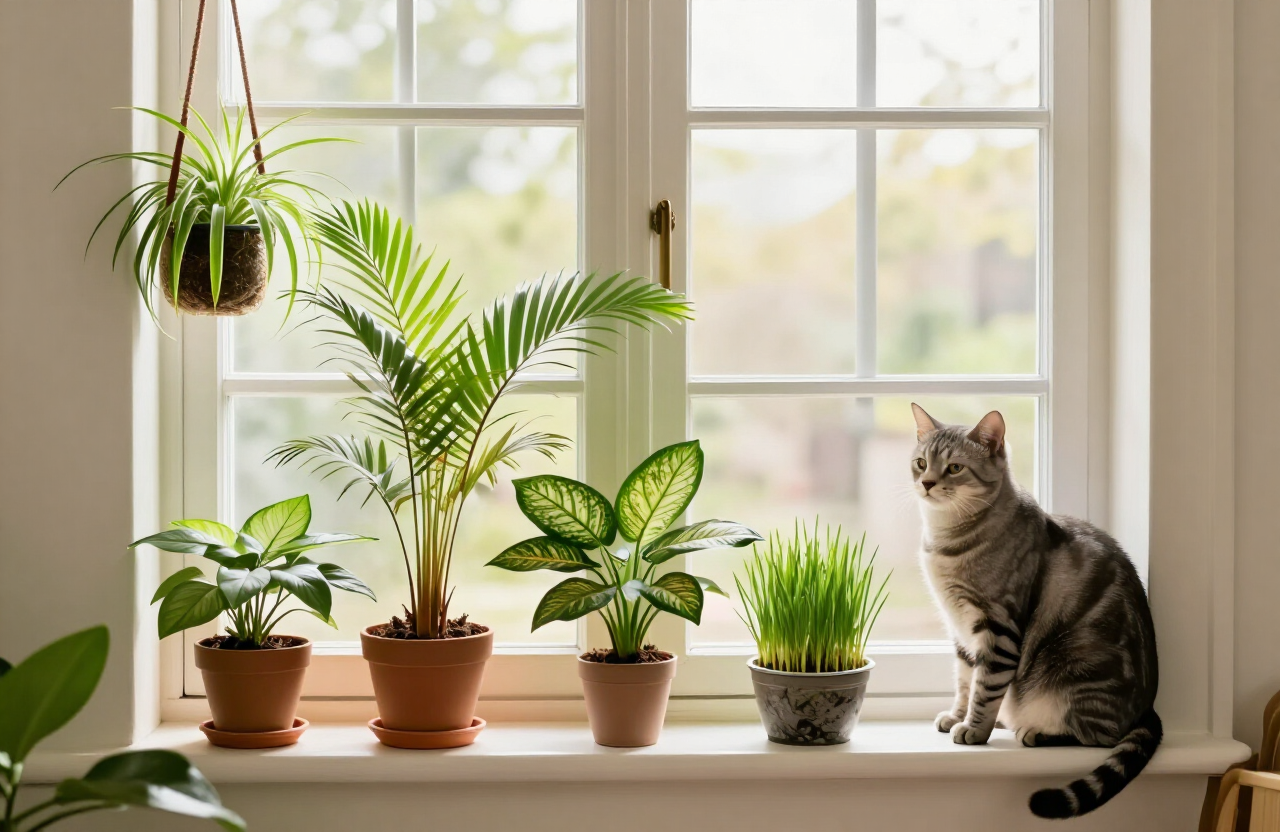
“Non-toxic” and “cat-safe” are not promises that a plant is harmless in every situation. They mean the plant is not known to contain the compounds that cause serious poisoning in cats — the oxalate crystals, saponins, cycasins, and other toxins found in plants like pothos, lilies, and sago palm. A non-toxic plant is a much lower-risk choice, but it is not a free pass to let your cat graze freely.
Even cat-safe plants can cause mild stomach upset, drooling, or vomiting if a cat eats enough of them — the same way eating a bowl of grass outside can. Foliage is not part of a cat’s natural diet, and any plant material can irritate a sensitive stomach. The goal is to choose plants that will not cause serious harm, then still discourage chewing and watch for any reaction.
“Non-toxic” means a plant is unlikely to seriously poison your cat. It does not mean it is a salad bar.
Why plant identification matters
Common names are unreliable. “Palm,” “lily,” “ivy,” and “fern” are applied to dozens of unrelated plants, and some of them are dangerous while others are perfectly fine. A parlor palm is widely listed as non-toxic to cats; a sago palm (which is not a true palm at all) is one of the more serious plants on the toxic list. A peace lily is not a true lily but is still harmful; a true lily can be life-threatening.
Before you buy, look up the plant by its botanical (Latin) name on a trusted animal-toxicity reference, and confirm with your veterinarian. Keep the plant’s label — the one with the scientific name — so you can identify it quickly if your cat ever chews it. If a plant arrives without a label, identify it before assuming it is safe, or pass it along to a plant-loving friend without cats.
Houseplants widely listed as non-toxic to cats
The plants below are popular, attractive, and widely listed as non-toxic to cats on major animal-safety references. None can be guaranteed 100% safe for every cat — individual sensitivities vary, and eating enough of any plant can cause stomach upset — so confirm each one with your own vet and still discourage chewing.
Spider plant
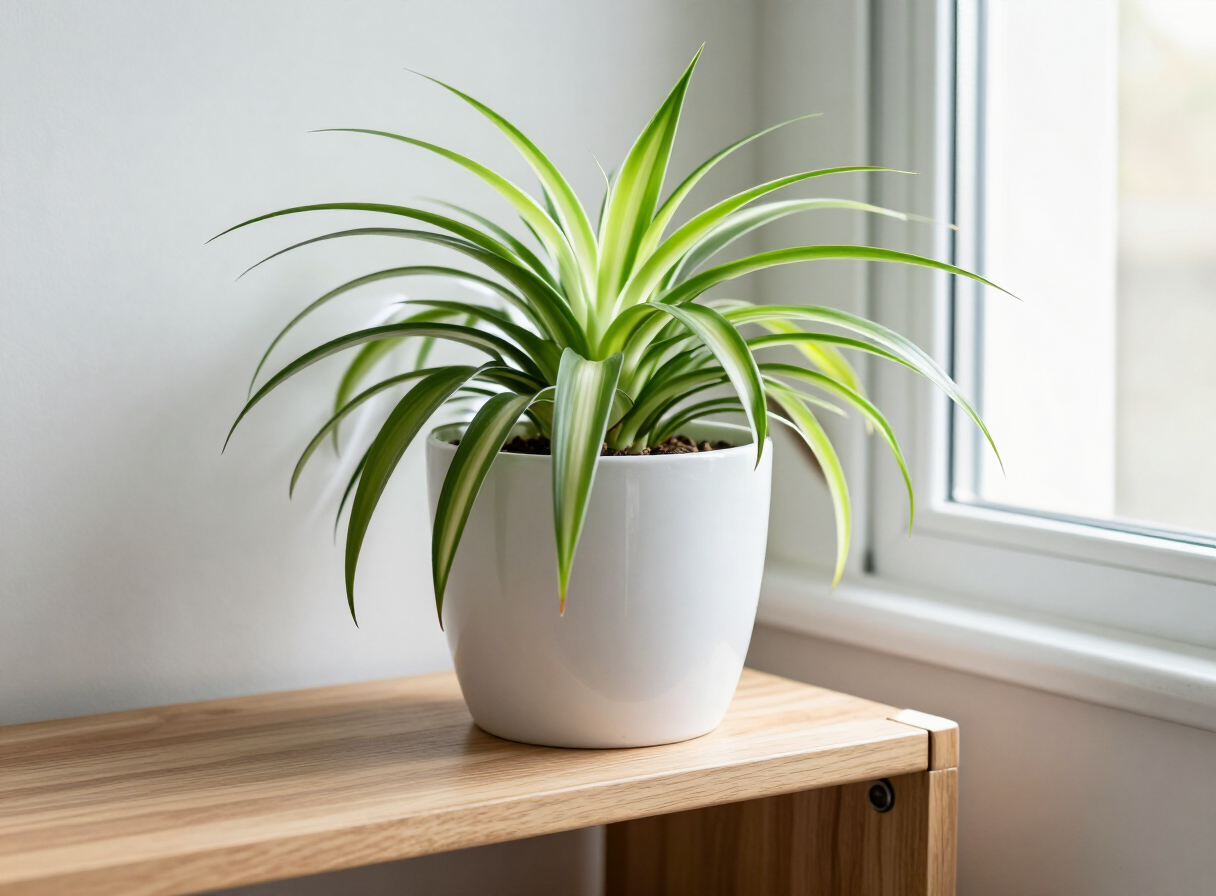
The spider plant (Chlorophytum comosum) is the classic cat-friendly trailer. Long arching green-and-white striped leaves, fast growth, and baby “spiderettes” that dangle temptingly — it is one of the most recommended swaps for pothos and English ivy. It is also famously appealing to cats, who like to bat at the dangling babies, so expect some playful interaction even if it is non-toxic.
How to grow it: bright, indirect light and regular watering when the top inch of soil dries. It forgives neglect and tells you when it is thirsty by looking a little pale. Hang it or set it on a high shelf and let the runners trail.
Parlor palm and areca palm
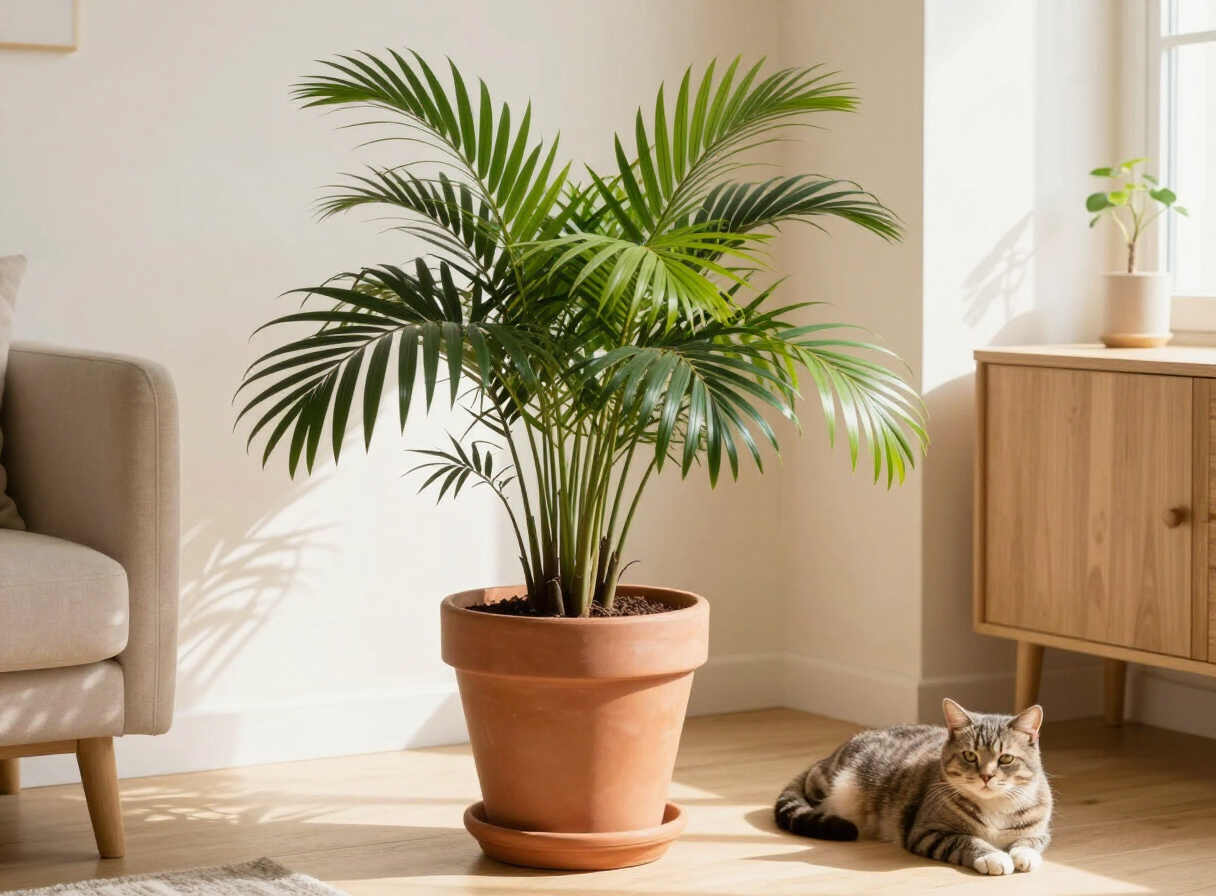
If you want the tropical look of a palm without the serious concerns of a sago palm, the parlor palm (Chamaedorea elegans) and areca palm (Dypsis lutescens) are both widely listed as non-toxic to cats. They are slow-growing, forgiving of lower light, and stay compact enough for a corner or a floor pot. The parlor palm in particular has earned its name as a Victorian parlor staple for good reason — it thrives indoors.
How to grow them: medium to bright indirect light, watering when the top couple inches of soil dry, and a pot with drainage. Avoid direct sun, which scorches the fronds. These give you the lush floor-plant silhouette without the worry.
Calathea and prayer plant
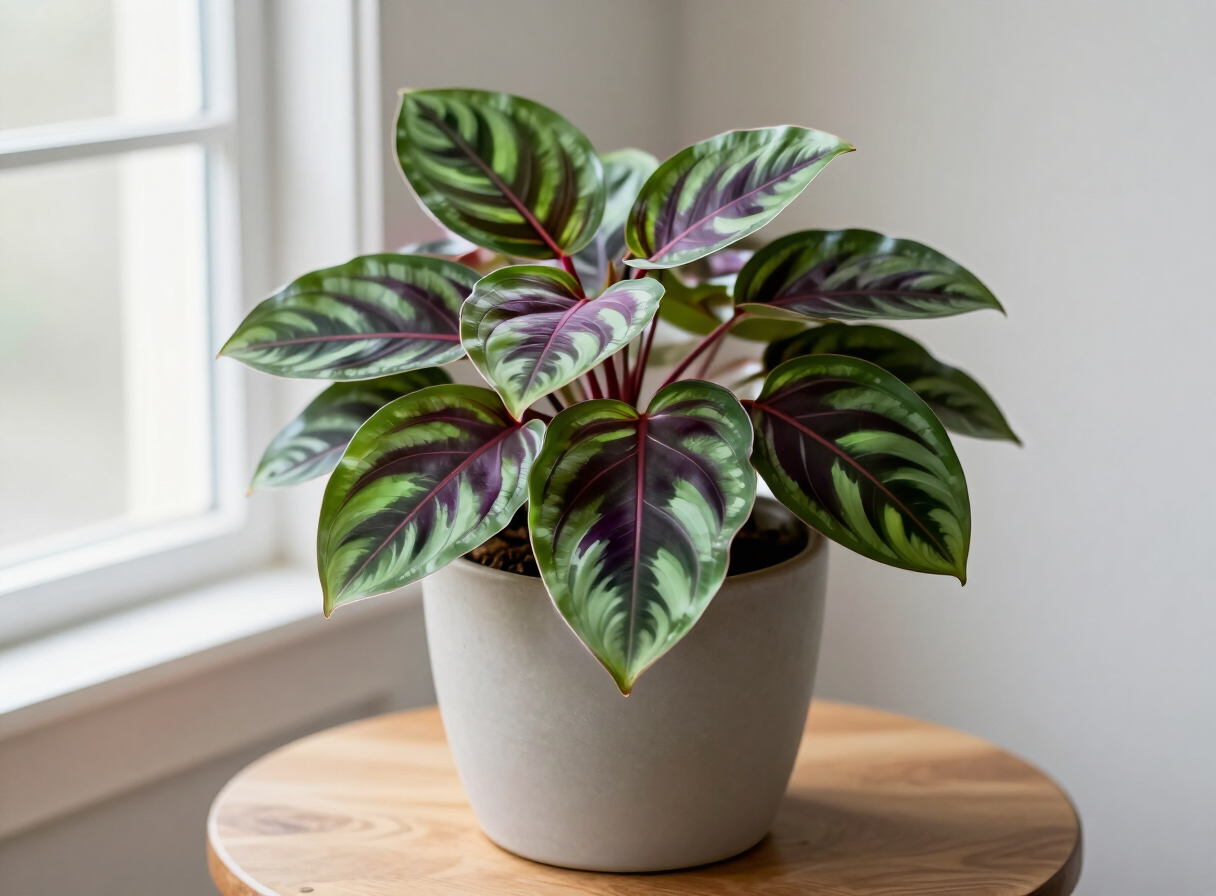
Calatheas (including the prayer plant, Maranta leuconeura) are grown for their foliage — round, patterned leaves in green, silver, and deep purple that fold upward at night as if in prayer. They are widely listed as non-toxic to cats and make a striking statement plant for a shelf or side table. They are a little fussier about humidity, so they reward a bright bathroom or a pebble tray.
How to grow them: bright indirect light (direct sun fades the patterns), consistent moisture without soggy soil, and added humidity. Filtered or distilled water helps prevent crispy leaf tips in homes with hard water.
Boston fern
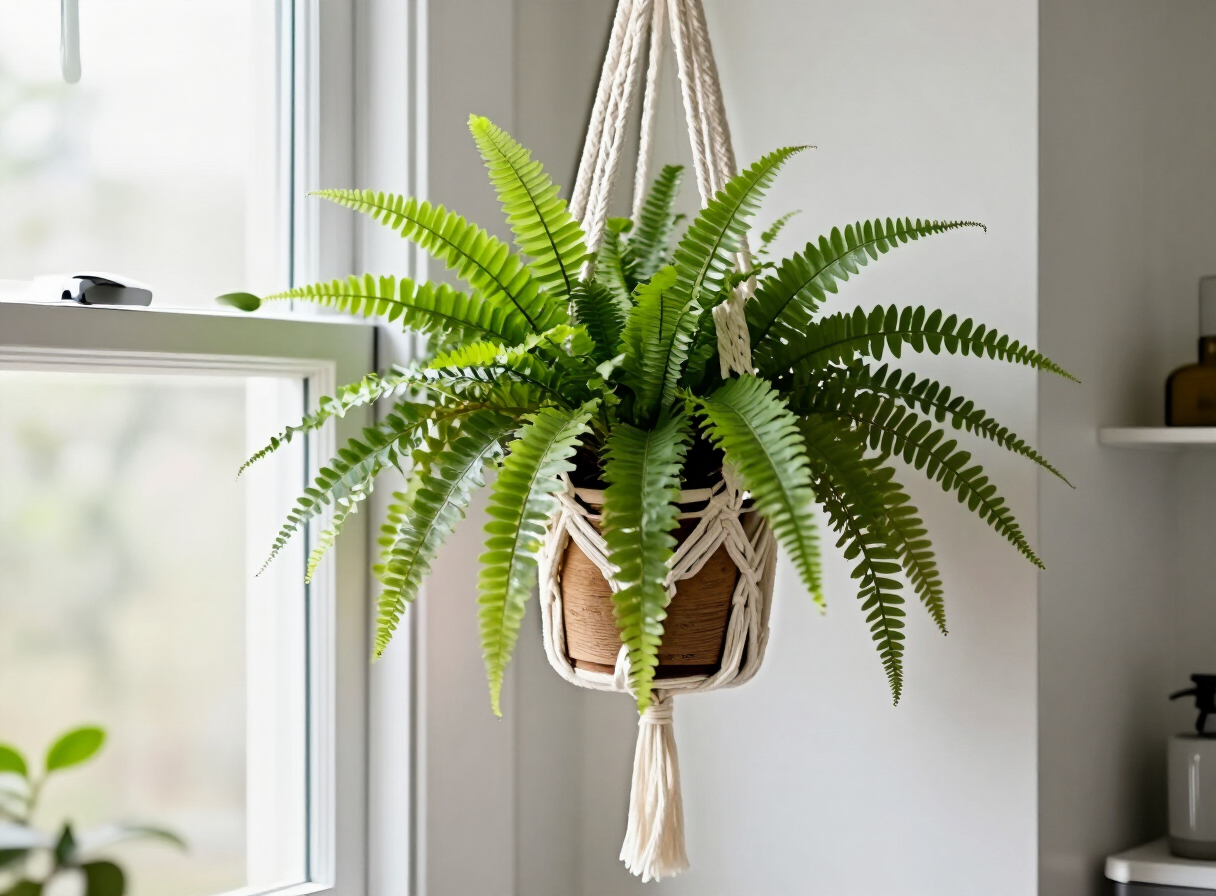
The Boston fern (Nephrolepis exaltata) is a full, feathery, non-toxic fern that loves humidity — making it a natural for a bright bathroom or a sheltered porch. Its cascading fronds look lush in a hanging planter, which also keeps the bulk of the plant out of easy paw reach. True ferns in the Nephrolepis genus are generally listed as non-toxic; be aware that some plants sold casually as “ferns” (like the asparagus fern) are not true ferns and can be harmful, so check the botanical name.
How to grow it: bright indirect light, consistently moist soil, and high humidity. It will crisp and shed if the air is too dry, which is your cue to move it somewhere more humid or set it on a pebble tray.
Cat grass
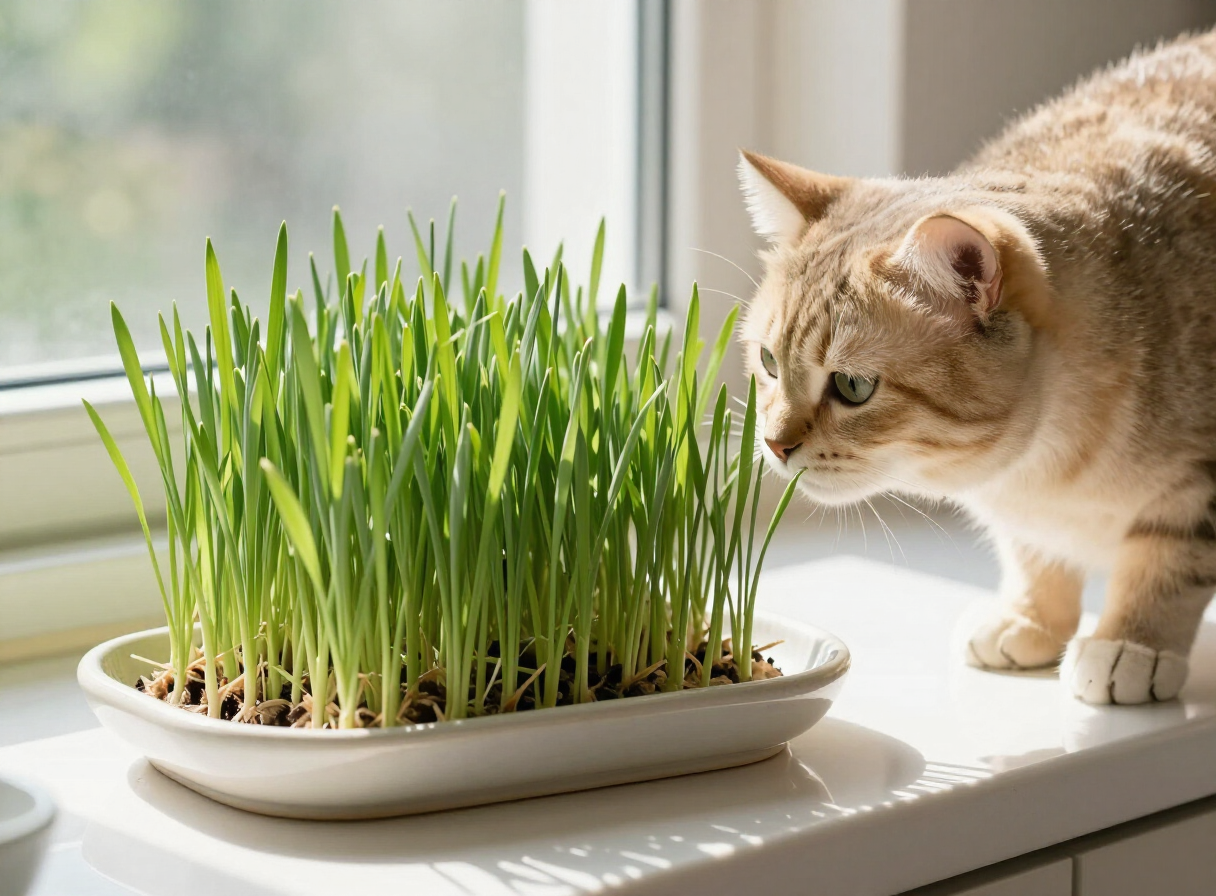
Cat grass — usually wheatgrass, oat grass, or barley — is grown specifically for cats to nibble. It is safe, satisfying, and gives your cat an approved patch of greenery so your houseplants lose some of their appeal. It is not a replacement for a balanced diet, and most cats eat only a little, but it is a smart distraction to keep on a sunny sill.
How to grow it: scatter seeds in a shallow tray of soil, keep moist, and set in bright light. It sprouts in days and lasts a few weeks before it is time to reseed. Offer it alongside your plants so your cat has a clearly better option.
More cat-friendly options to consider
Beyond the plants above, these are also widely listed as non-toxic to cats on major animal-safety references. As always, confirm with your own veterinarian before assuming any plant is fine for your cat, and check the exact botanical variety.
- Peperomia — compact, cat-friendly, and easy on a windowsill.
- African violet — a flowering, non-toxic option for bright indoor light.
- Catnip and catmint — grown in a pot, a safe and entertaining treat.
- Phalaenopsis (moth) orchid — elegant blooms, widely listed as non-toxic.
- Money tree (Pachira aquatica) — a braided-trunk floor plant, non-toxic.
- Friendship plant (Pilea involucrata) — textured, non-toxic foliage.
- Haworthia and echeveria — non-toxic succulents for sunny sills (double-check the exact species; some succulents, like jade, are not safe).
- Herbs like basil, rosemary, and thyme — generally non-toxic and useful in the kitchen.
How to tell cat-safe plants from toxic look-alikes
The easiest trap is the shared common name. A few pairings to be careful with:
- Parlor palm and areca palm (non-toxic) vs. sago palm (seriously toxic — not a true palm).
- Boston fern and other true ferns (non-toxic) vs. asparagus fern (can be harmful — not a true fern).
- Spider plant (non-toxic) vs. spider lily (can be harmful — unrelated plant).
- True lilies (Lilium, seriously dangerous) vs. plants with “lily” in the name that are not true lilies, like peace lily (still harmful) and calla lily (still harmful) — treat any “lily” with caution and verify by botanical name.
- Jade plant (can cause vomiting) vs. other rosette succulents like Haworthia (widely listed as non-toxic).
The pattern is the same every time: do not trust the common name alone. Look up the botanical name, confirm it on a trusted toxicity reference, and check with your vet. When a plant is sold without a label, identify it before you assume it is safe.
“Palm,” “lily,” and “fern” are labels, not guarantees. The botanical name is the one that tells you whether a plant belongs in a cat’s home.
What to do if your cat eats an unknown plant
Even with a house full of cat-safe plants, accidents happen — a gift bouquet, a plant brought in without a label, or a curious chew on something you have not identified. If your cat eats a plant you cannot confirm is safe, act quickly and calmly. Fast contact with a professional matters far more than home measures.
- Remove your cat from the plant and move the plant somewhere your cat cannot reach. Check their mouth for leftover pieces and gently wipe away any sap or pollen on their fur or face with a damp cloth so they do not swallow more while grooming.
- Save a sample. Snip a leaf or stem, keep any vomited pieces, and take a clear photo of the whole plant — including the label if it came with one. Identifying the exact plant helps your vet choose the right response.
- Call your veterinarian or an animal poison service right away. Have the plant name (or your photo), an estimate of how much was eaten, and the time it happened ready. In the U.S., the ASPCA Animal Poison Control Center (888-426-4435) and Pet Poison Helpline (855-764-7661) are common resources; charges may apply.
- Follow the professional’s instructions exactly. Do not induce vomiting, do not give milk, salt, hydrogen peroxide, or any home remedy, and do not wait to see if symptoms pass unless a veterinarian tells you to. Some plants cause more harm coming back up.
- Get to a clinic if you are told to. Bring the plant sample and your cat in a secure carrier. If emergency signs appear — collapse, seizures, trouble breathing, or no urination — treat it as an emergency and go immediately.
Common symptoms after exposure to a harmful plant can include drooling, pawing at the mouth, vomiting, diarrhea, lethargy, loss of appetite, or changes in drinking and urination. These are not a diagnosis — many other health issues cause the same signs — so let your veterinarian decide what is going on.
Do not induce vomiting or try home remedies unless a veterinarian tells you to. The right first step is a phone call, not a guess.
Smart habits for a cat-and-plant home
A few habits keep most cats and most plants safely together:
- Choose plants you have verified as non-toxic by botanical name, and keep the label.
- Keep known-toxic plants out of the house entirely — especially true lilies and sago palms.
- Hang or elevate trailing plants so dangling vines are not an invitation to chew.
- Offer a dedicated tray of cat grass so your cat has an approved thing to nibble.
- Use a pet-safe bitter deterrent spray on leaves as a backup to discourage chewing.
- Clean up dropped leaves and flowers promptly, and change vase water so a cat cannot drink it.
- Ask florists to leave lilies out of bouquets, and check any gift plant by name before bringing it inside.
A quick reference to pin
- Widely non-toxic: spider plant, parlor palm, areca palm, calathea, prayer plant, Boston fern, peperomia, African violet, cat grass, catnip, moth orchid, money tree.
- Look-alikes to verify: parlor palm vs. sago palm, Boston fern vs. asparagus fern, any “lily,” jade vs. other succulents.
- “Non-toxic” is not “edible” — even safe plants can cause mild stomach upset if a cat eats enough.
- If exposure happens: remove access, save a sample and photo, call your vet or a poison helpline, do not induce vomiting.
The safest plant is the one you have already verified with your veterinarian. When in doubt, leave it out.
The bottom line
You can have a green, leafy home and a curious cat under the same roof. Choose plants widely listed as non-toxic — spider plant, parlor palm, calathea, Boston fern, cat grass — verify every plant by its botanical name, keep risky look-alikes out entirely, and offer cat grass as a distraction. If your cat ever chews an unknown plant, remove access, save a sample and photo, and call your veterinarian or a poison helpline immediately — do not induce vomiting or try home remedies.
Pin this guide, double-check every plant with your veterinarian, and your cat gets to share a home with greenery that is genuinely safe to be curious about.
Pin this for later
Save this story to your Pinterest so you can find it when you are ready to shop.