Creamy Mashed Potatoes: The Thanksgiving Side Everyone Fights Over
Topic
Recipes
Published
Oct 2, 2026
Read time
7 min
By
Her Favorite Finds
This post contains affiliate links. We may earn a commission if you buy through them — at no extra cost to you.
Silky, buttery, and never gluey — the mashed potatoes that steal the Thanksgiving table. Exact ingredients, numbered steps, and the warm-dairy trick that changes everything.
Mashed potatoes are the side dish that quietly carries the whole Thanksgiving plate. Done right, they are silky, buttery, and cloud-soft — the thing everyone reaches for first. Done wrong, they are gluey, watery, or cold before the turkey is even carved. This is the recipe for every November: a clear ingredients list, numbered steps, and the one warm-dairy trick that turns ordinary potatoes into the dish people fight over.
Prep time, cook time, servings
Prep: 15 minutes · Cook: 20 minutes · Total: about 35 minutes · Servings: 8 (easily doubled for a crowd).
Ingredients
Use exact quantities the first time — mashed potatoes are forgiving on method, not on ratios.
- 3 lb russet or Yukon Gold potatoes (about 6–8 medium)
- 1 tsp kosher salt, plus more for the cooking water
- 8 tbsp (1 stick) unsalted butter, melted
- ¾ cup whole milk, gently warmed
- ½ cup heavy cream, gently warmed
- ½ tsp freshly ground black pepper
- ¼ tsp garlic powder (optional)
- Extra butter and chopped fresh chives or parsley, to finish
1. Choose the right potato
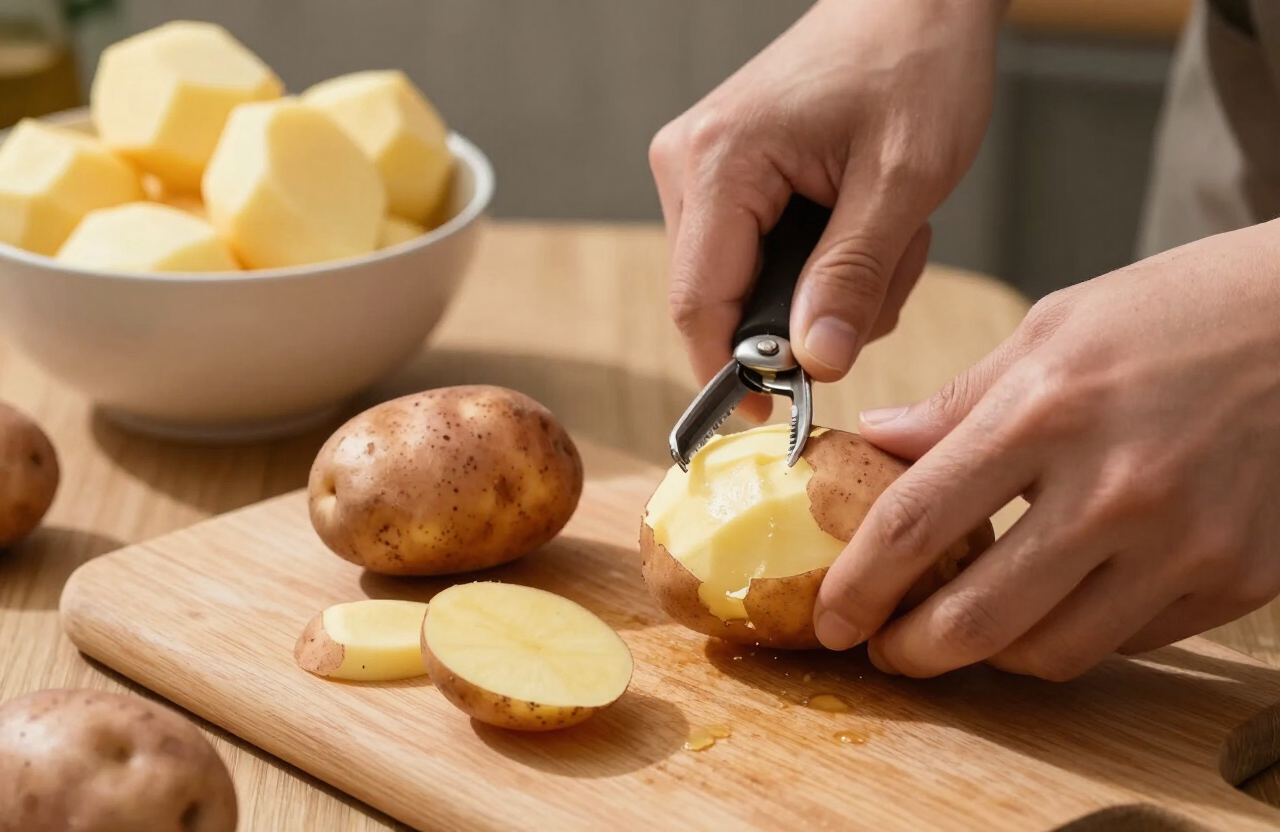
Russets give the fluffiest, lightest mash because they are high in starch and low in moisture. Yukon Golds are a touch denser but richer and naturally buttery — a great middle ground. Avoid red or new potatoes; their waxy texture turns gummy when mashed. Peel the potatoes for the silkiest result, or leave the skins on Yukon Golds if you prefer a rustic look.
2. Cut evenly and cook
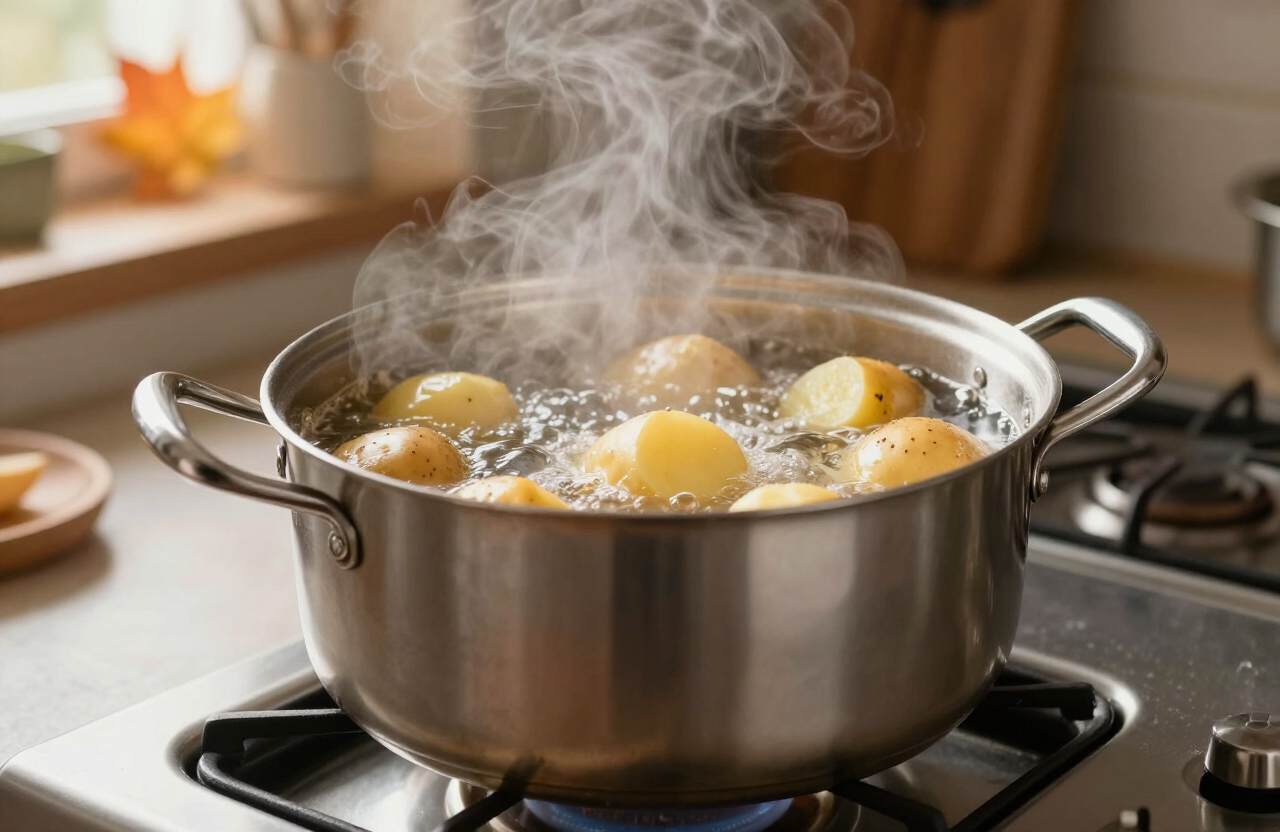
Cut the potatoes into 1½-inch chunks so every piece cooks at the same rate. Place them in a large pot and cover with cold water by an inch — starting cold ensures even cooking from the edge to the center. Add a generous handful of kosher salt to the water (it should taste like the sea), then bring to a boil over high heat. Reduce to a steady simmer and cook 15–18 minutes, until a fork or paring knife slides through a chunk with zero resistance.
3. Drain thoroughly
Drain the potatoes in a colander and let them sit for a minute. Any water left in the pot becomes watery mash — and water is the enemy of creamy. Shake the colander gently to release trapped moisture from the nooks of each chunk.
4. Dry them back in the pot
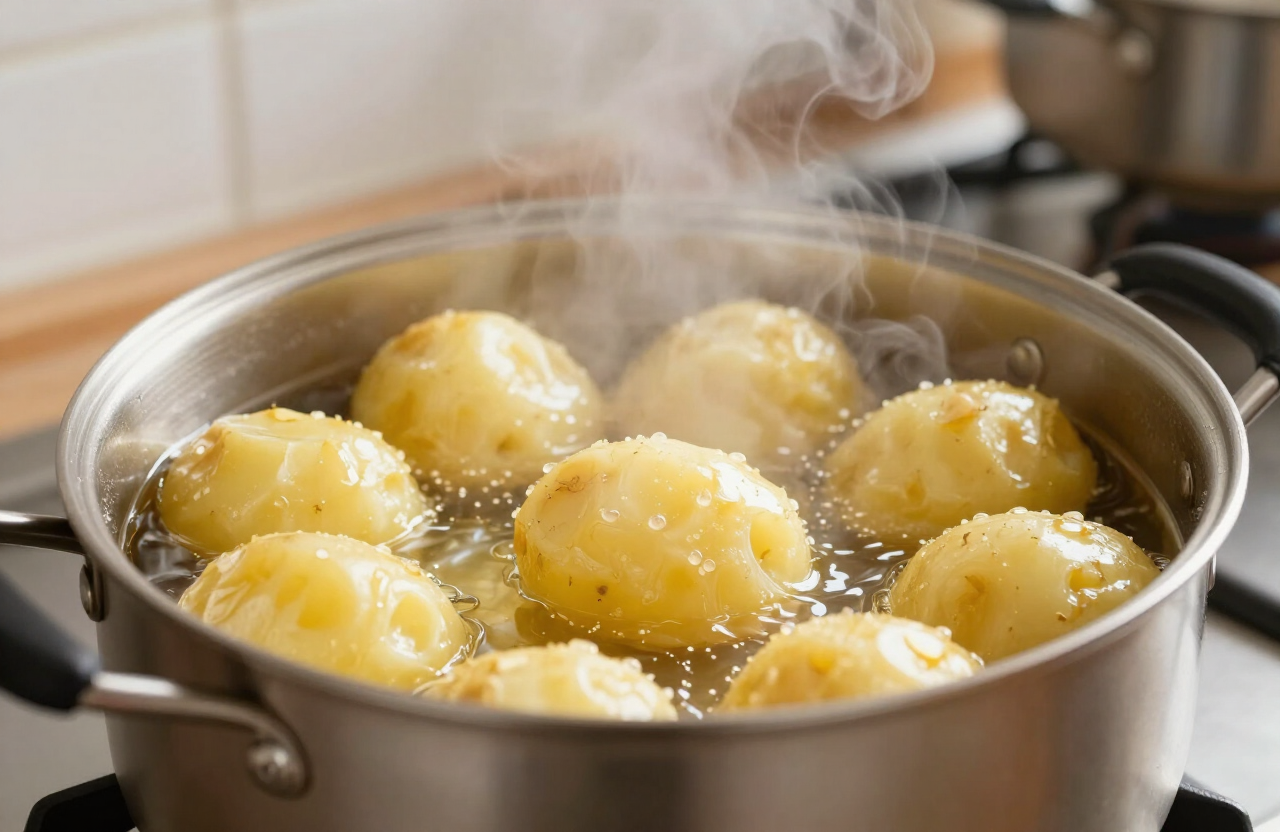
Return the drained potatoes to the still-warm pot and set it back on the burner with the heat off. The residual heat evaporates the last surface moisture and fluffs the starch — this 60-second step is the difference between creamy and watery. You will see faint steam rise off the potatoes; when it stops, they are ready.
5. Mash gently
Mash with a sturdy hand masher — never a blender, food processor, or stand mixer with a paddle. Overworking the starch is what makes potatoes gluey and paste-like. Mash just until smooth with a few small lumps remaining; a little texture is a feature, not a flaw. Stop the moment everything is broken down.
Mash to combine, not to conquer. The moment you overwork the starch, the potatoes turn to glue.
6. Add warm dairy
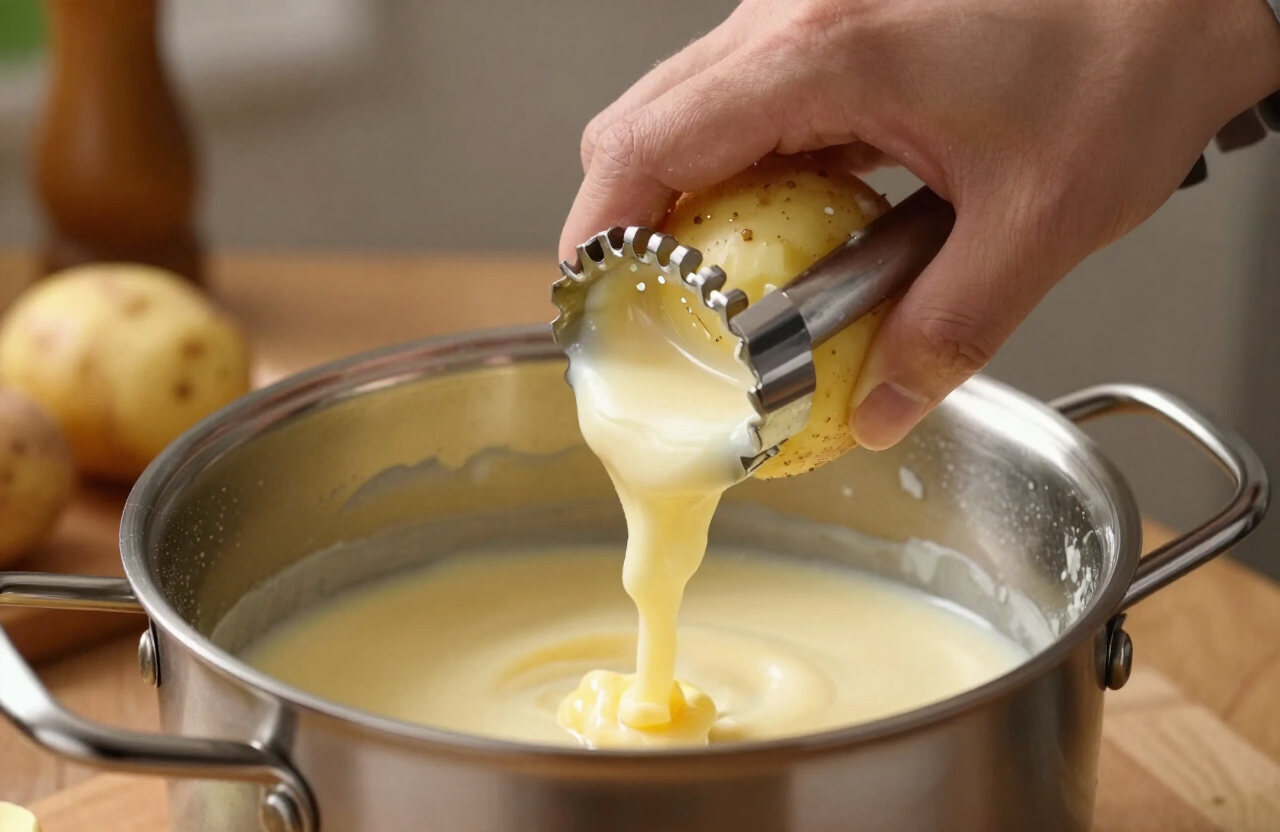
This is the trick that changes everything: warm the milk and cream before they touch the potatoes. Cold dairy shocks the starch and seizes it into lumps; warm dairy folds in smoothly and keeps everything silky. Pour in the melted butter first and fold it through, then add the warm milk and cream in stages, stirring gently, until the potatoes are as loose or as stiff as you like. Save a little dairy back — you can always add more, but you cannot take it out.
7. Season and taste
Stir in the kosher salt, black pepper, and garlic powder if using. Taste now, not at the table — potatoes need more salt than you think because the starch dulls it. Adjust in small pinches until each bite tastes seasoned, not flat. Fold in chopped chives or parsley at the very end so the color stays bright.
8. Hold them warm
To hold mashed potatoes for up to an hour, transfer them to a heavy pot or Dutch oven, cover tightly, and set over the lowest possible heat — or keep them in a slow cooker on the warm setting. Stir every 15 minutes and add a splash of warm milk if they tighten up. Never leave them over direct medium heat; the bottom will scorch and ruin the whole batch.
9. Serve
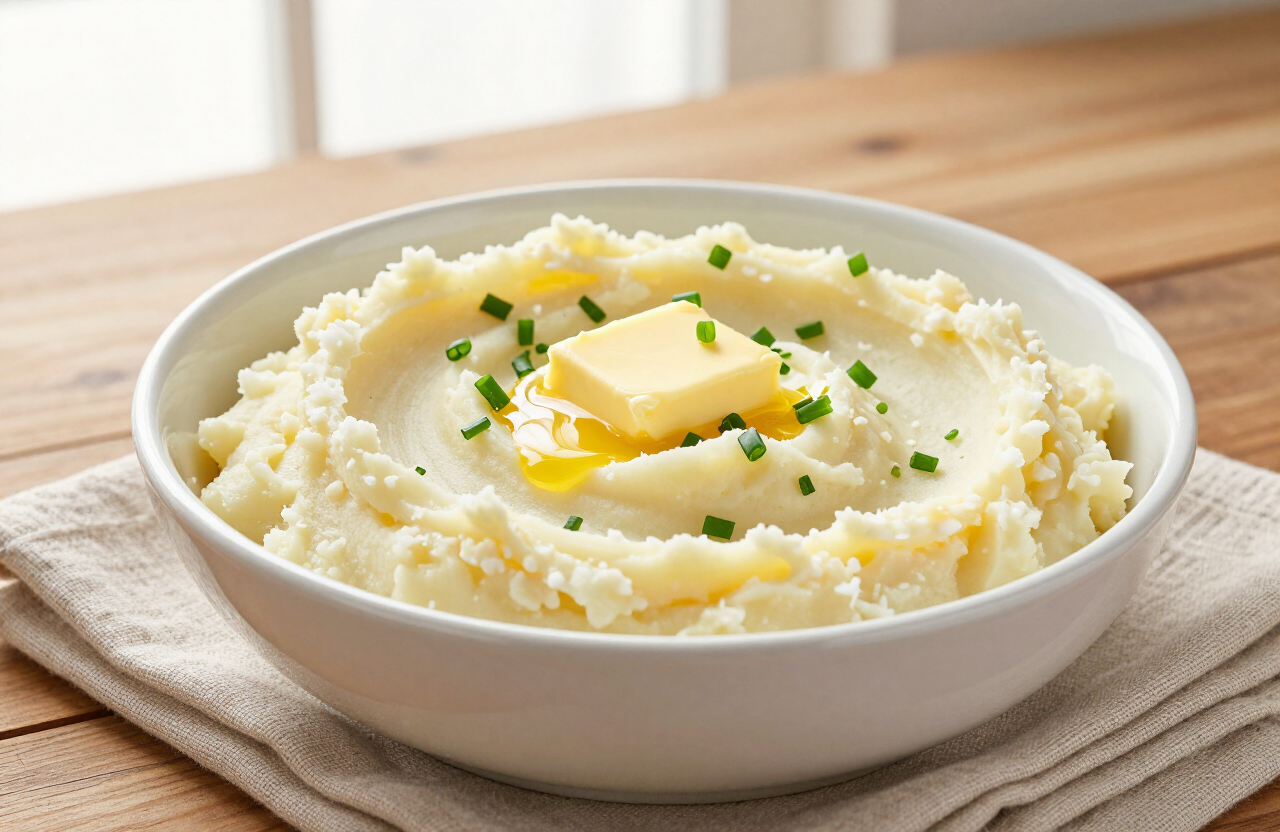
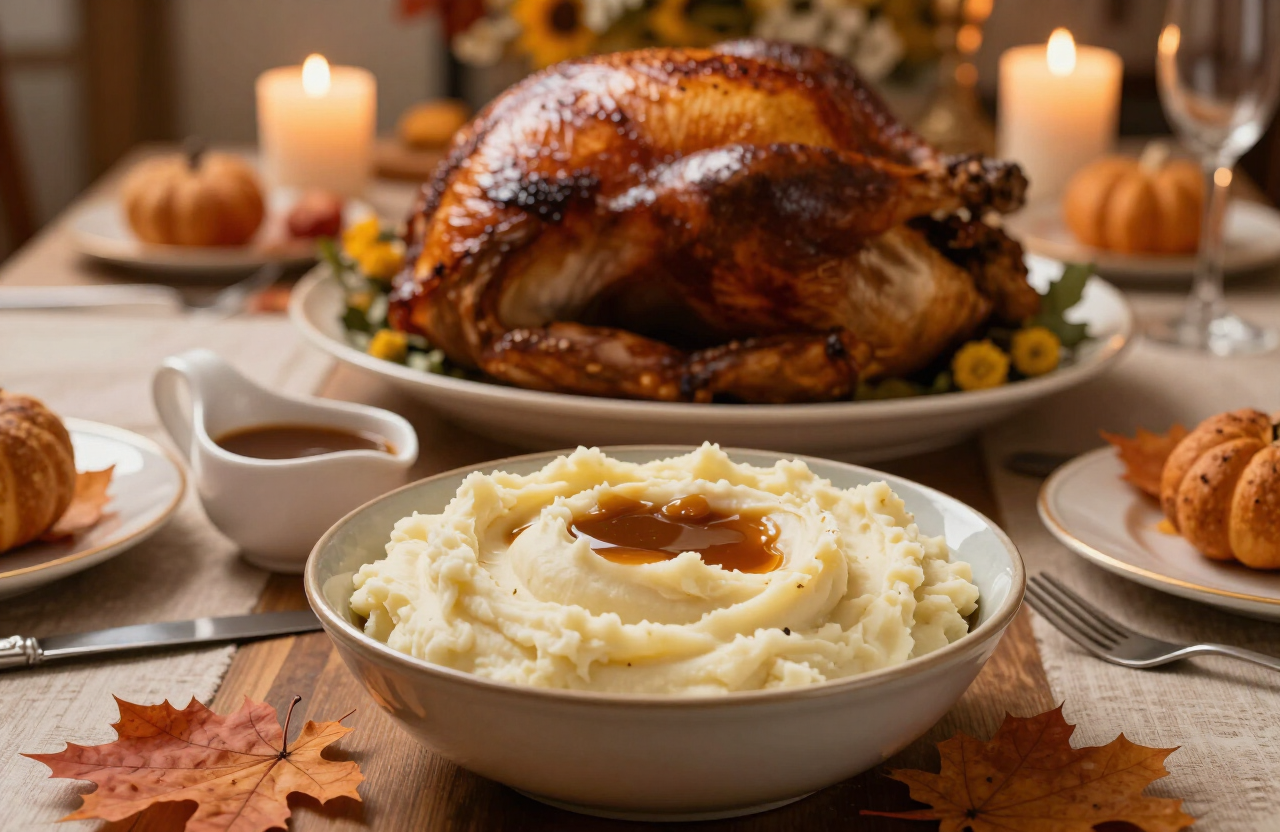
Spoon the potatoes into a warm serving bowl, make a well in the center, and drop in a pat of butter so it pools and melts. Finish with a crack of black pepper and a scatter of chives. Pass the gravy boat — these potatoes were built for it.
Make-ahead and storage
- Make ahead: cool fully, then refrigerate in an airtight container for up to 2 days. Reheat gently with a splash of warm milk over low heat, stirring often.
- Freezer: mashed potatoes freeze well for up to 1 month. Thaw overnight in the fridge, then reheat slowly with extra warm cream to bring back the silk.
- Refrigerator leftovers: keep 3–4 days. Reheat in a covered pot over low heat with a tablespoon of milk — never microwave dry, which toughens them.
- Big-batch tip: for a crowd, make them the morning of and hold in a slow cooker on warm for up to 4 hours, stirring occasionally.
Why mashed potatoes go wrong
Gluey potatoes come from overworking the starch — usually a blender or too-long beating. Watery potatoes come from skipping the drain-and-dry step or adding cold dairy. Lumpy potatoes mean the chunks were uneven or undercooked. Fix each by choosing the right potato, cooking evenly, drying back, mashing gently, and warming the dairy. That is the whole system.
Right potato, even cook, dry back, gentle mash, warm dairy. Five moves, perfect potatoes.
The bottom line
Russets or Yukon Golds, cut evenly, start in cold salted water, cook until fork-tender, drain and dry back, mash gently, fold in warm butter and warm dairy, season hard, hold warm. That is the entire recipe — no secret step hiding anywhere. Pin this guide, make it once before the holiday to dial in your dairy, and let these potatoes be the side everyone asks for again next year.
Pin this for later
Save this story to your Pinterest so you can find it when you are ready to shop.