The Perfect Thanksgiving Turkey: A Clear, Step-by-Step Guide
Topic
Recipes
Published
Oct 1, 2026
Read time
9 min
By
Her Favorite Finds
This post contains affiliate links. We may earn a commission if you buy through them — at no extra cost to you.
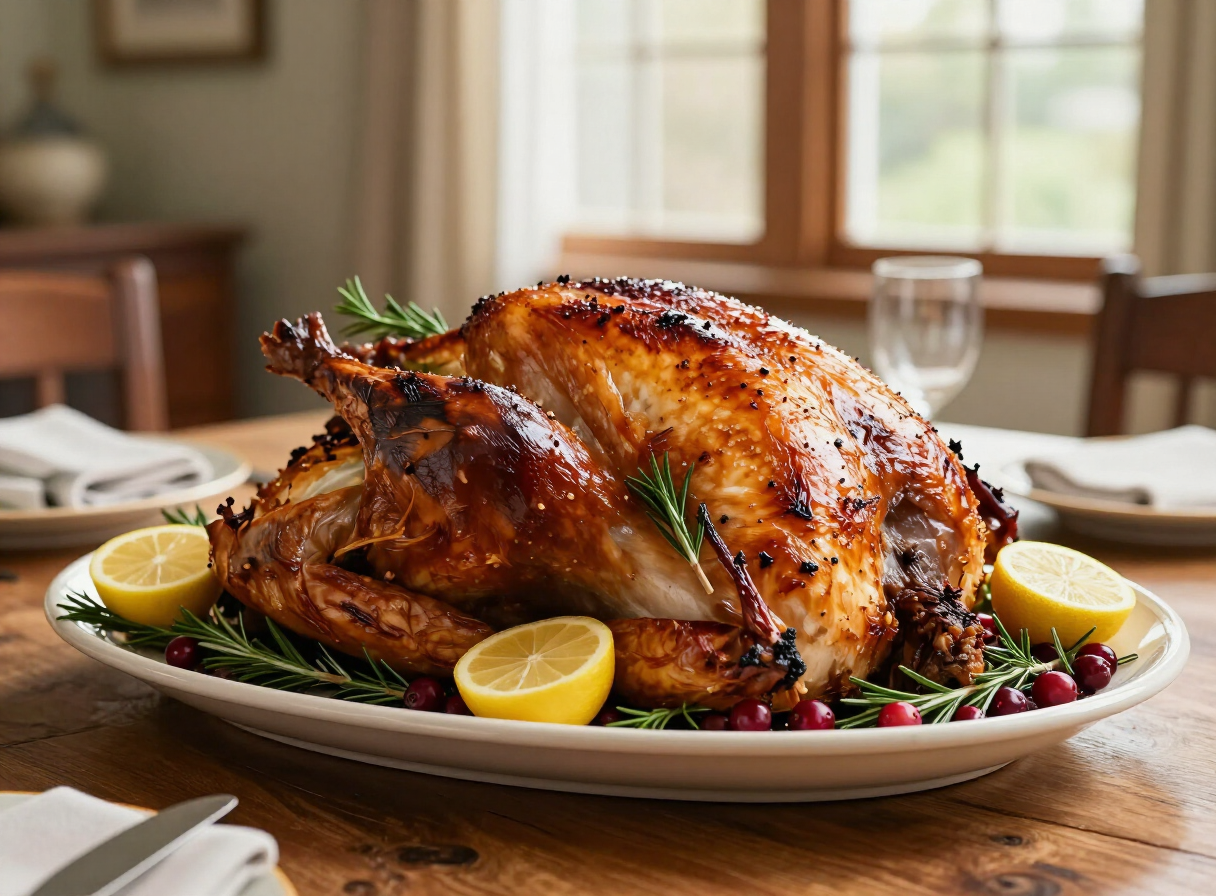
One 12–14 lb turkey, one herb butter, and one thermometer — the exact ingredients, temperatures, and step-by-step directions for a golden, juicy bird, from thaw to carve.
The turkey is the only dish on the Thanksgiving table that arrives with its own audience. Everyone watches it come out of the oven, and everyone remembers whether it was juicy. The good news: a great turkey is not a talent — it is a plan. Thaw it in time, salt it the night before, keep the butter under the skin, and trust a thermometer instead of the clock.
This guide walks the whole road — thawing, dry-brining, herb butter, roasting times by size, the temperature check that actually matters, resting, carving, and what to do with the leftovers. Follow it once and it will be the same recipe you reach for every November.
At a glance
- Prep: about 20 minutes of hands-on work (plus thawing and an overnight dry brine)
- Cook: roughly 13 minutes per pound at 325°F — about 2½–3 hours for a 12–14 lb turkey, unstuffed
- Rest: 30–45 minutes before carving
- Serves: 8–10 people, with leftovers
- Done temperature: 165°F in the thickest part of the thigh
Thaw first: the timetable that saves Thanksgiving
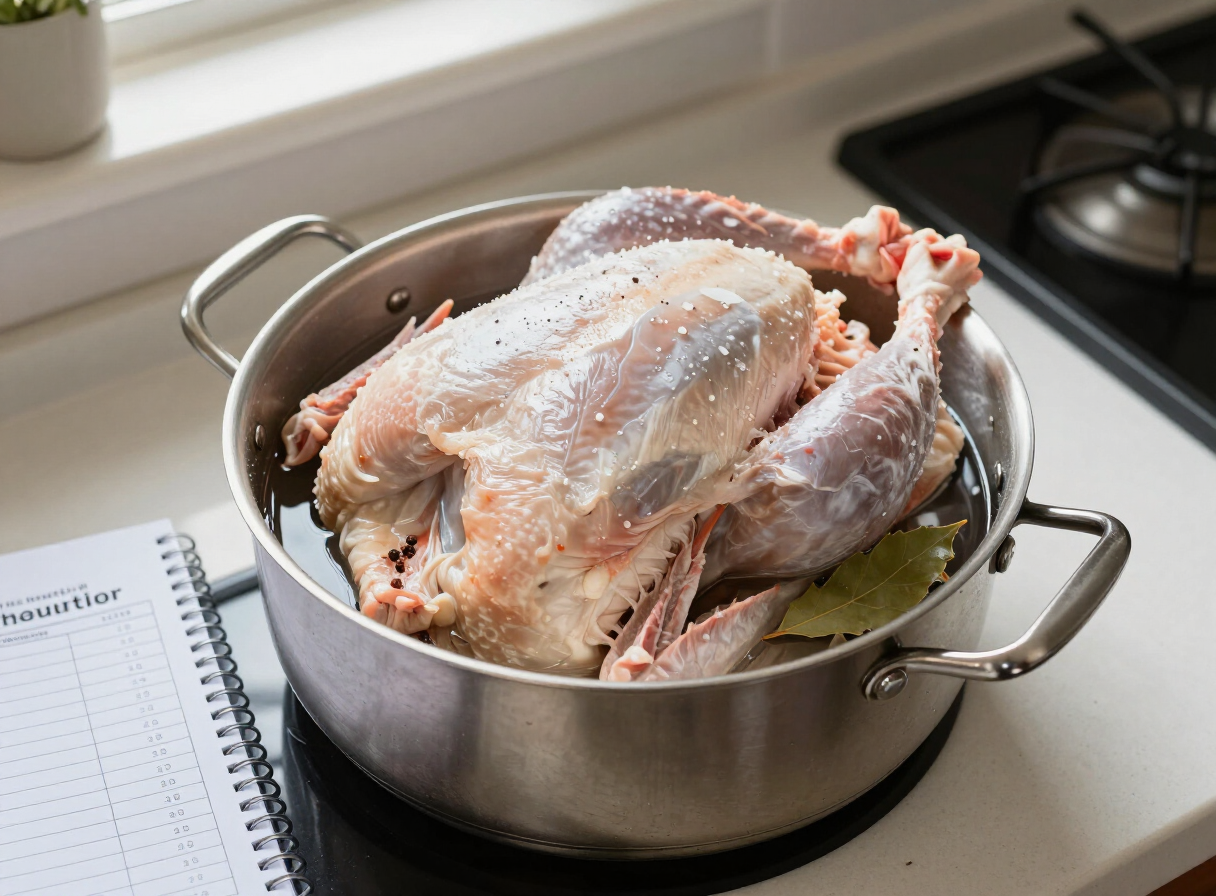
Almost every turkey problem starts in the freezer. A partially frozen bird roasts unevenly — overcooked on the outside, icy at the joint — and no amount of herb butter fixes that. Thaw in the refrigerator, never on the counter: room-temperature thawing keeps the surface in the food-safety danger zone for hours. Allow a full 24 hours in the fridge for every 4–5 pounds.
- 8–12 lb turkey: 1–2 days in the refrigerator
- 12–16 lb turkey: 2–3 days in the refrigerator
- 16–20 lb turkey: 3–4 days in the refrigerator
- 20–24 lb turkey: 4–5 days in the refrigerator
Short on time? The cold-water method works: keep the turkey in its sealed wrapper, submerge it in cold water, and change the water every 30 minutes. Allow about 30 minutes per pound — a 12-pound bird needs roughly 6 hours — and cook it immediately after thawing. Never use hot water, and never thaw a turkey on the kitchen counter.
Ingredients
For one 12–14 pound turkey, serving 8–10 with leftovers:
- 1 whole turkey, 12–14 lb, fully thawed, giblet packet removed from both cavities
- 3 tablespoons kosher salt, for the overnight dry brine (1 tablespoon per 5 lb)
- 8 tablespoons (1 stick) unsalted butter, softened
- 4 garlic cloves, minced
- 1 tablespoon chopped fresh rosemary
- 1 tablespoon chopped fresh thyme
- 1 tablespoon chopped fresh sage
- 1 teaspoon kosher salt (for the herb butter)
- 1 teaspoon freshly ground black pepper
- 1 lemon, halved
- 1 small yellow onion, quartered
- 4–6 sprigs each fresh rosemary, thyme, and sage (for the cavity)
- 2 cups low-sodium chicken broth (for the roasting pan)
- 1 tablespoon olive oil, for brushing the skin
That is the entire shopping list. No brine bucket, no specialty injectors — the overnight dry brine and the herb butter do the work those gadgets promise.
Directions: from counter to table
- Dry-brine the night before. Unwrap the thawed turkey, remove the giblets, and pat the bird very dry with paper towels. Sprinkle 1 tablespoon of kosher salt per 5 pounds all over — skin, cavity, and a little under the skin where you can reach it. Set it breast-side up on a rack over a tray and refrigerate, uncovered, for 12–24 hours. This is the step that seasons the meat deep down and dries the skin so it crisps instead of steams.
- Preheat the oven. Move the oven rack to the lowest position and preheat the oven to 325°F (165°C) while you finish preparing the bird.
- Make the herb butter. Mash the softened butter with the minced garlic, chopped rosemary, thyme, and sage, 1 teaspoon kosher salt, and the black pepper until evenly mixed.
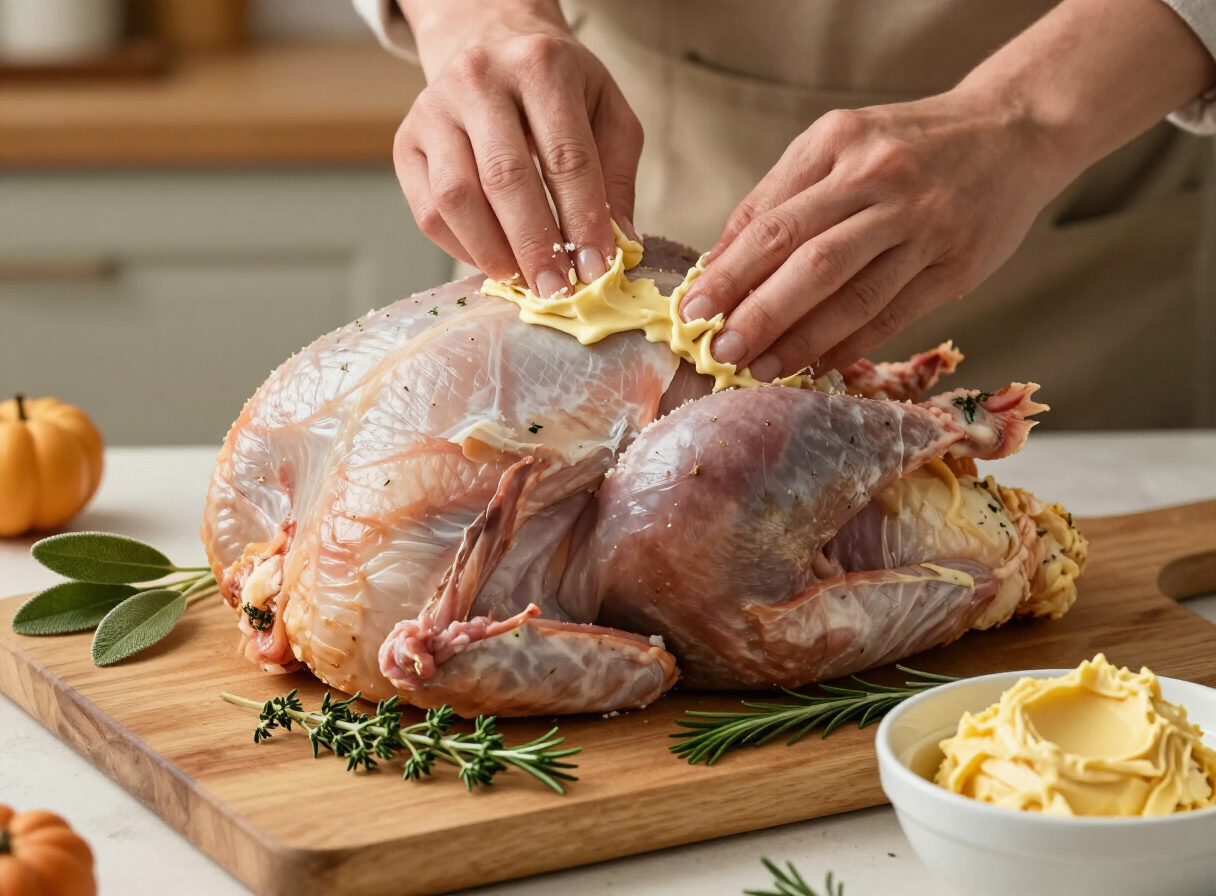
- Butter under the skin. Working from the neck end, slide your fingers under the breast skin to loosen it without tearing, then push two-thirds of the herb butter directly onto the meat and spread it evenly. Rub the remaining third over the thighs and drumsticks and the outside of the skin.
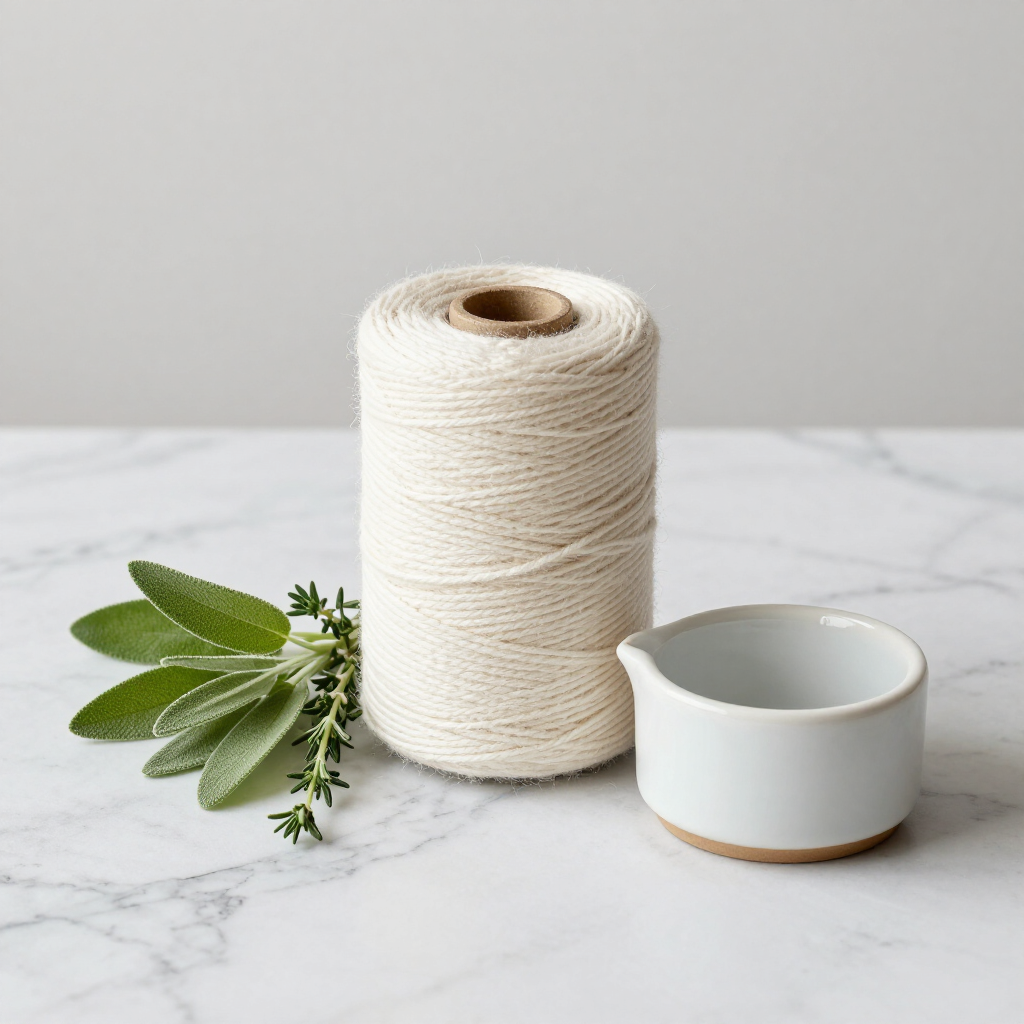
- Fill the cavity and tie. Stuff the cavity with the halved lemon, the quartered onion, and the herb sprigs — aromatics only, not stuffing, which slows and unevenly cooks the bird. Tuck the wing tips behind the back, and tie the legs together with kitchen twine.
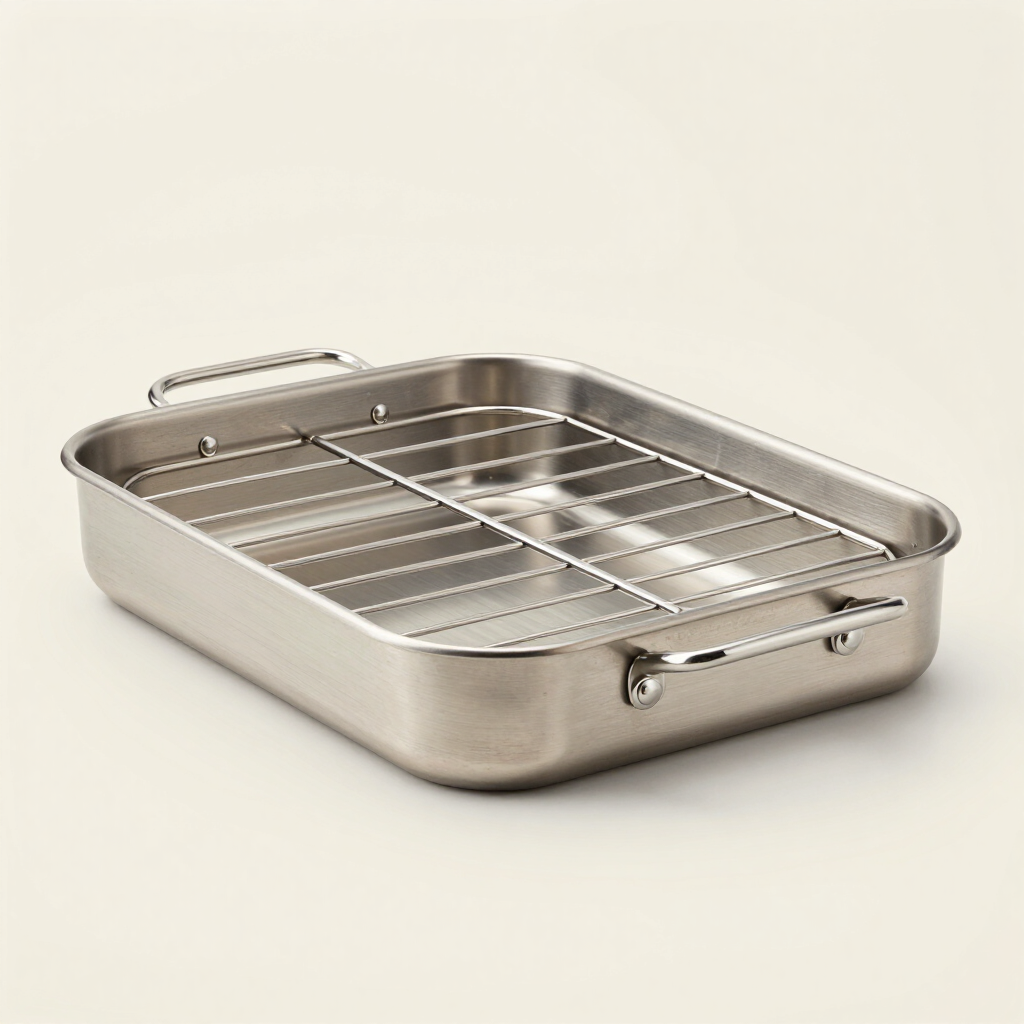
- Set up the pan. Place the turkey breast-side up on a rack set inside a heavy roasting pan. Pour the 2 cups of chicken broth into the pan — it protects the drippings from scorching and gives you a head start on gravy. Brush the skin with the olive oil.
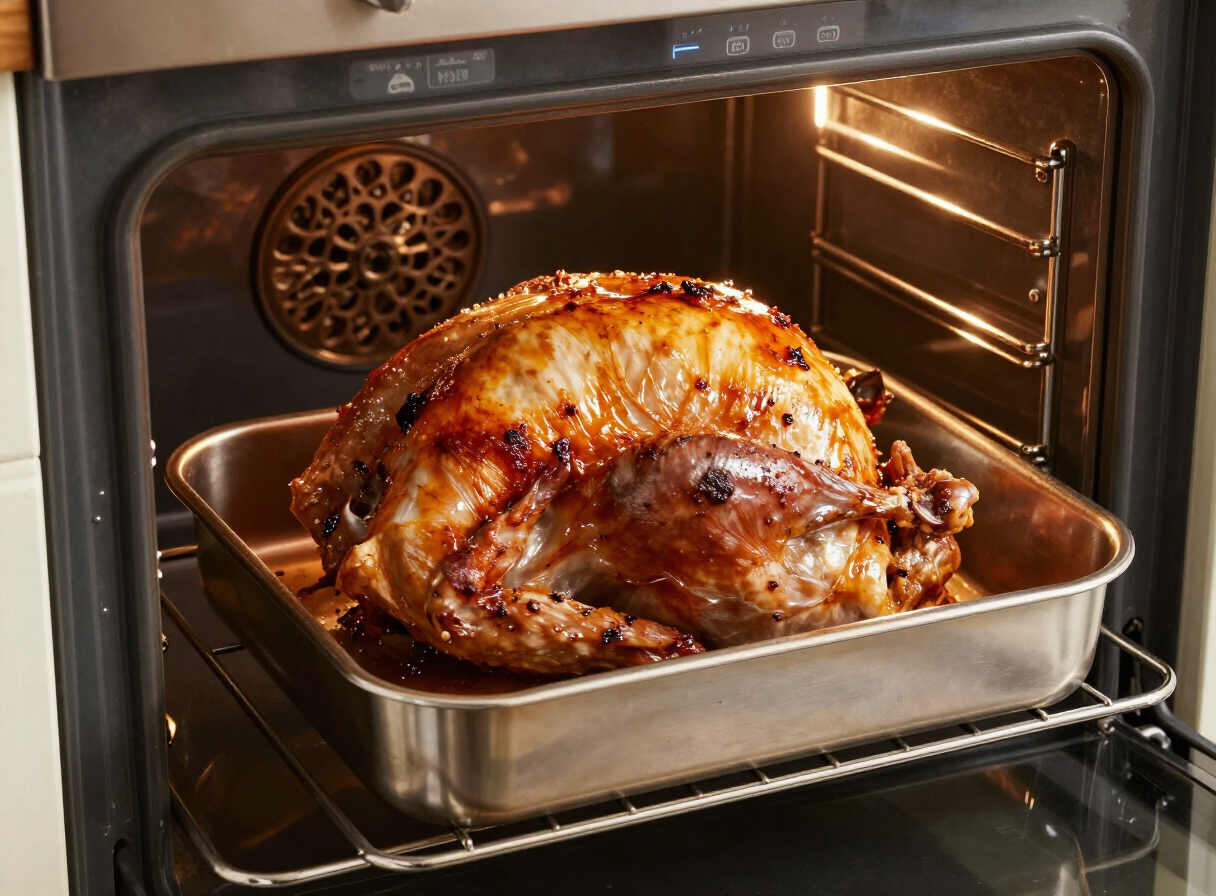
- Roast low and steady. Roast at 325°F, roughly 13 minutes per pound unstuffed — about 2½ to 3 hours for a 12–14 lb bird. Ovens vary meaningfully, so treat time as an estimate and the thermometer as the truth. Rotate the pan once or twice if your oven browns unevenly, and lay a loose foil tent over the breast if the skin is browning faster than the thighs are cooking.
- Baste in the final hour. Once or twice in the last hour, tilt the pan and use a baster to spoon the hot drippings over the skin. Two or three passes are plenty — every extra opening of the oven door lets heat escape and lengthens the cook.
- Check the temperature — do not guess. Start checking about 30 minutes before your estimated finish. Insert an instant-read thermometer into the thickest part of the thigh, without touching bone. The turkey is done when the thigh reads 165°F and the juices run clear. If the breast reaches 160°F while the thigh lags behind, that is fine — the breast will keep climbing as it rests.
- Rest before carving. Move the turkey to a carving board, tent it loosely with foil, and let it rest 30–45 minutes. This is not optional: resting lets the juices redistribute so they stay in the meat instead of on the board. A big bird holds its heat easily — use the time to finish the sides and make gravy from the pan drippings.
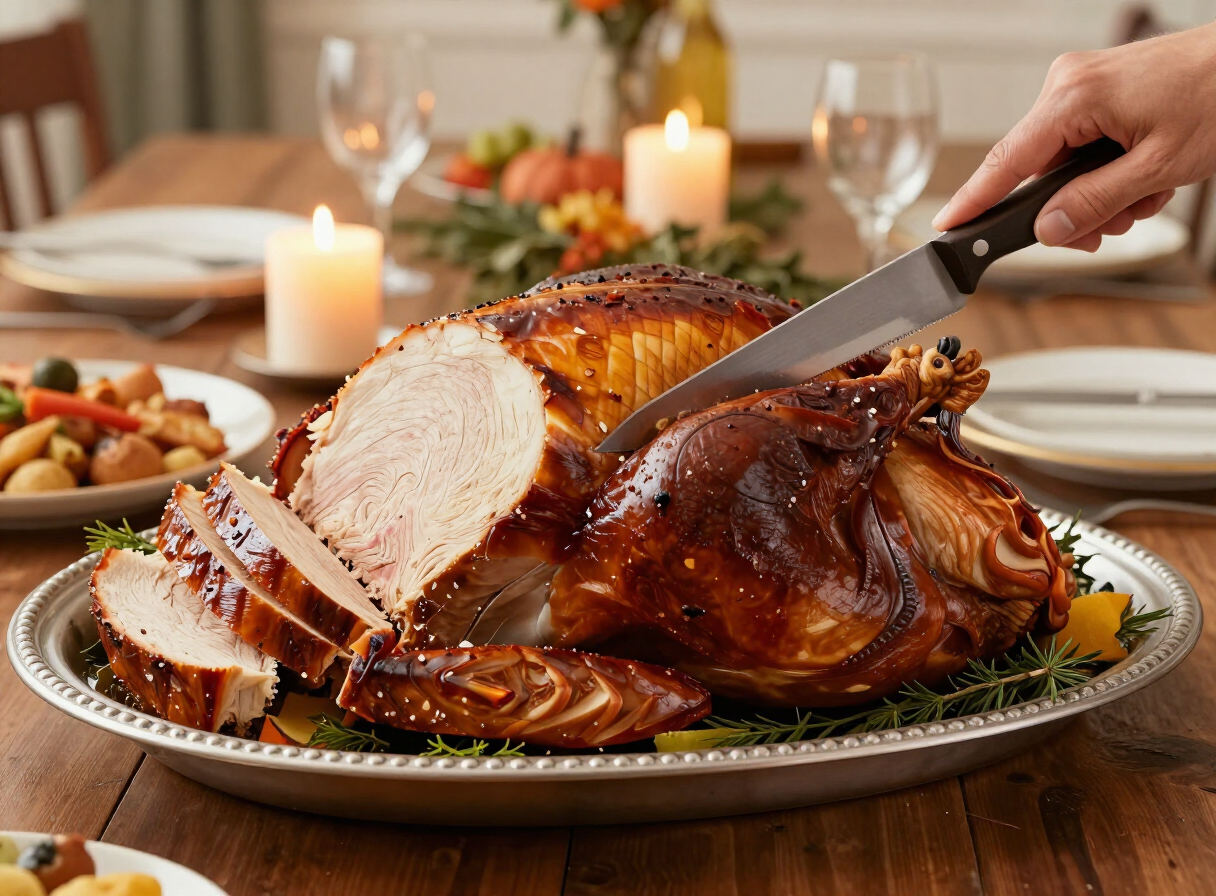
- Carve and serve. Cut the twine. Slice down through the skin between the leg and breast to remove the whole leg, then separate thigh from drumstick at the joint. Find the breastbone and slice the breast meat against the grain into even, half-inch slices. Arrange on a warm platter, spoon over a little pan gravy, and bring it to the table while everyone is still seated.
The temperature check that matters most
If you buy one tool for Thanksgiving, make it an instant-read thermometer. Color is a liar — smoked-pink meat near the bone can be fully cooked, and pale skin can hide an undercooked thigh. The rule is simple: 165°F (74°C) in the thickest part of the thigh, measured without touching bone, with juices running clear. That is the temperature food-safety references use for whole poultry, and it is the finish line for juicy, not just safe.
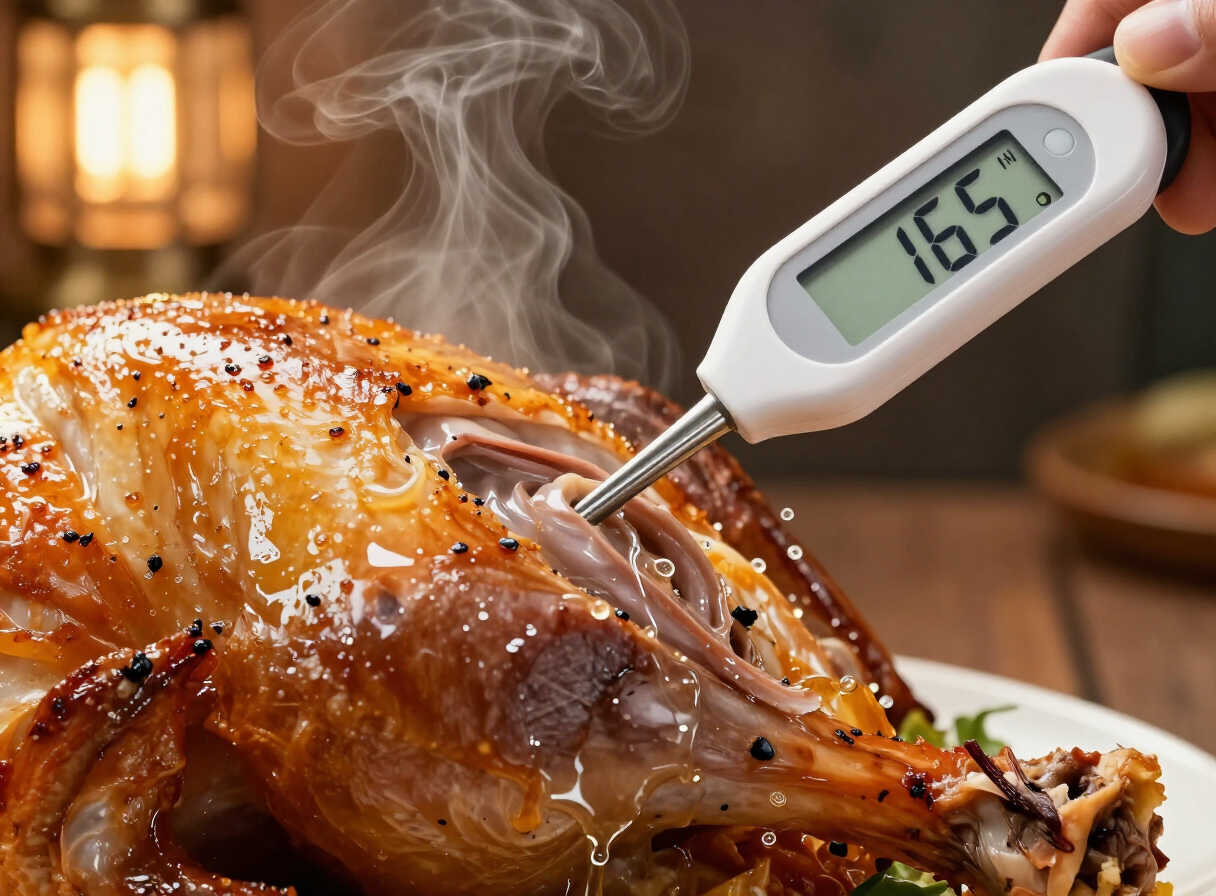
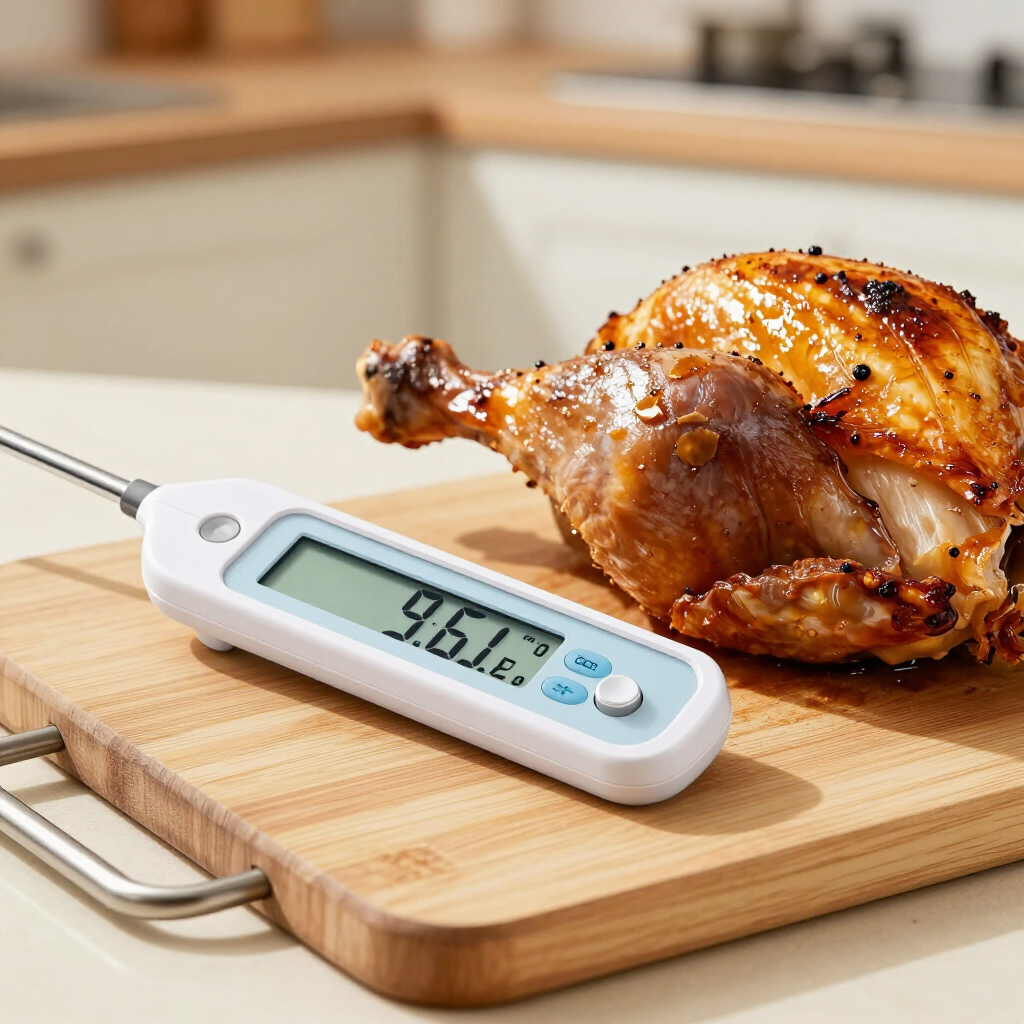
Check both thighs — ovens have hot spots, and one side often runs ahead of the other. If you pull the bird at 160–162°F because you are nervous about the breast, tent it well and know that the thigh must still reach 165°F before anyone eats. When in doubt, back in the oven it goes.
Seasoning and moisture tips that actually work
The dry brine is the flavor engine: salt the night before and the meat seasons itself from the inside out. The herb butter is the moisture insurance — fat directly on the breast meat, under the skin, bastes the turkey as it roasts far better than anything dripped on top of the skin. Keep the aromatics in the cavity light (lemon, onion, herbs) so they perfume the bird without blocking airflow.
Salt it the night before, butter it under the skin, and trust the thermometer. Everything else is tradition, not technique.
Do not wash the raw bird — rinsing splashes bacteria around the sink and does nothing for flavor. And skip basting with the pan liquid every 20 minutes: each door opening costs heat, and the skin crisps better from a dry surface than a wet one.
Resting and carving
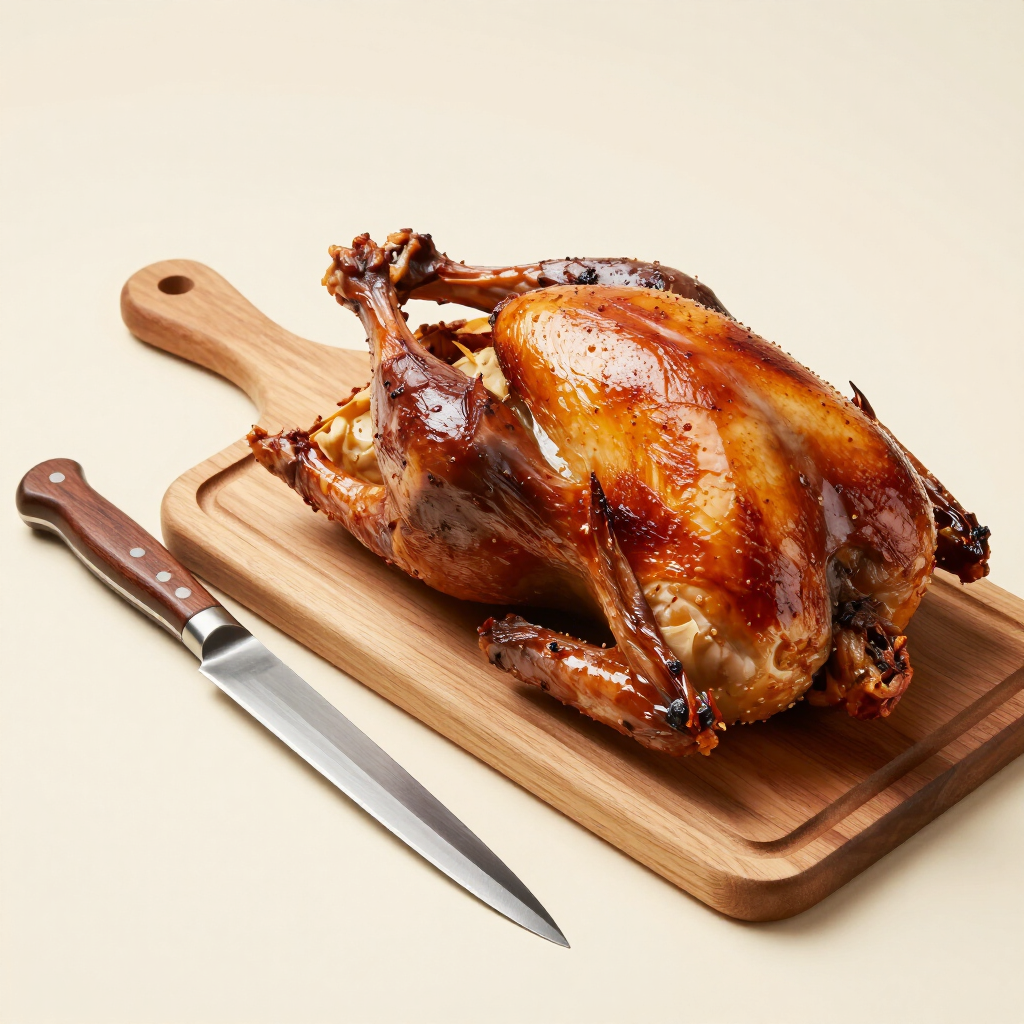
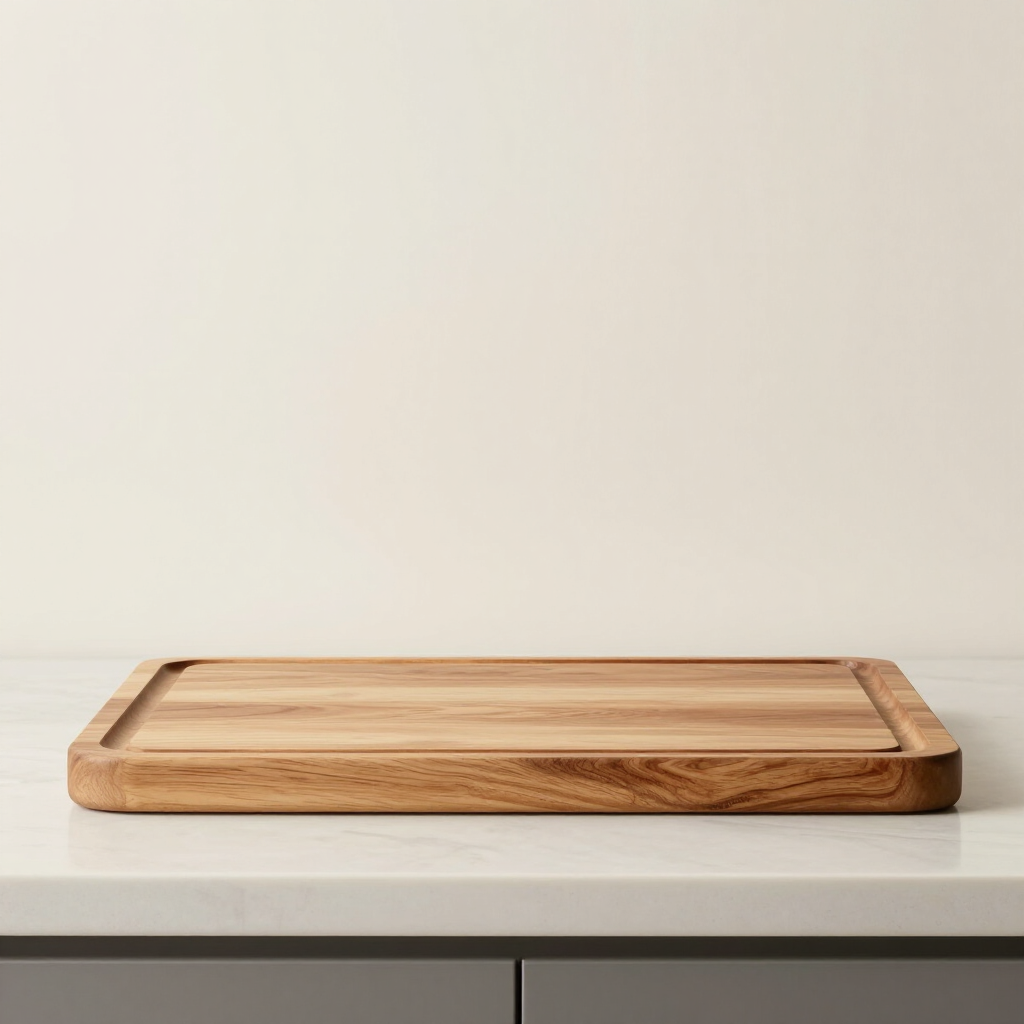
Give it a full 30–45 minutes of rest, loosely tented with foil. Carve on a board with a juice groove so nothing is lost — those juices are liquid gravy. Legs and thighs off first, then long, even slices of breast against the grain. A sharp, long carving knife matters more than technique; a dull blade shreds everything it touches.
A quick gravy from the pan
Strain the pan drippings into a fat separator or measuring cup and skim the fat off the top. For each cup of drippings, whisk about 2 tablespoons of flour into 2 tablespoons of the skimmed fat in a saucepan over medium heat until it smells nutty, then pour in the drippings plus enough broth to reach 2 cups. Whisk constantly until it thickens, season with salt and pepper, and serve warm.
Storing leftovers safely
- Refrigerate within 2 hours of the turkey leaving the oven — do not let it sit out through dessert and the game.
- Strip the meat from the carcass and store it in shallow airtight containers so it chills quickly.
- Refrigerated turkey keeps 3–4 days; frozen slices keep well for 2–3 months.
- Reheat leftovers to 165°F — gravy, too, and reheat gravy to a full boil.
- Save the carcass: simmered with water, an onion, and a bay leaf, it becomes the best turkey stock of the year.
A rested turkey carved on time, refrigerated within two hours — that is the whole safety story.
The bottom line
Thaw it in the fridge a full day per 4–5 pounds, salt it the night before, herb butter under the skin, 325°F until the thigh reads 165°F, rest 30–45 minutes, carve with a sharp knife. That is the entire secret — there is no fifth step hiding anywhere. Pin this guide, make your thawing plan tonight, and let the thermometer take the pressure off the big morning.
Pin this for later
Save this story to your Pinterest so you can find it when you are ready to shop.