Plants That Are Not Safe for Cats (And What to Do If Yours Takes a Bite)
Topic
Pets
Published
Sep 29, 2026
Read time
9 min
By
Her Favorite Finds
This post contains affiliate links. We may earn a commission if you buy through them — at no extra cost to you.
A practical guide to common house and garden plants that can be harmful to cats, how to recognize them, the symptoms exposure may cause, and exactly what to do if your cat chews or swallows one — plus safer plant alternatives.
Cats and houseplants are two of the best things about a home — and two of the most stubborn about coexisting. Cats chew leaves, bat at trailing vines, knock pots off shelves, and sometimes swallow pieces whole. Most of the time that is harmless. Sometimes it is not. A surprising number of popular house and garden plants contain compounds that can make a cat sick, and a few can be genuinely dangerous even in tiny amounts.
This guide is a practical starting point, not a veterinary manual. It covers common plants that are widely documented as harmful to cats, how to recognize them, the kinds of symptoms exposure may cause, and exactly what to do if you think your cat has chewed or swallowed part of a plant. Plant toxicity can vary by species, by the part of the plant, and by the individual cat — so always verify any plant with your own veterinarian before bringing it home, and call them right away if exposure happens.
Why cat owners should care
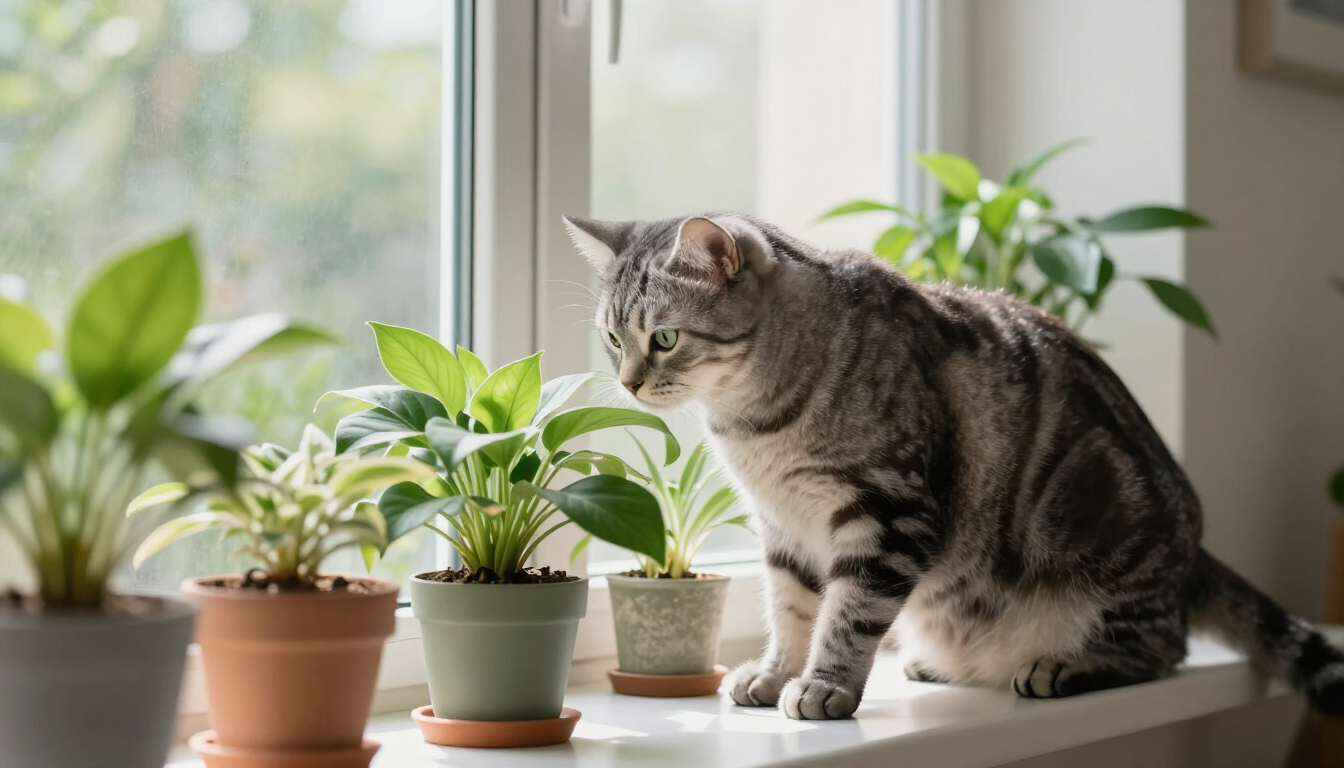
Cats are small, and their livers process certain compounds differently than ours or a dog’s. That means a plant that is harmless to humans — or even to other pets — can still be a problem for a cat. Cats also groom meticulously, so sap or pollen on their fur often ends up in their mouth during cleaning even if they never bit the plant directly.
The risk is not the same for every plant. Some cause mild stomach upset. Others can irritate the mouth and throat. A small number can damage organs like the kidneys. Knowing which category a plant falls into helps you decide how urgently to act — and which plants simply do not belong in a cat’s home at all.
A plant does not have to be deadly to be worth removing. “Mildly toxic” still means a sick cat and a vet bill.
Common houseplants that can harm cats
These are some of the most commonly sold houseplants that are widely documented as toxic or harmful to cats. This is not a complete list — there are many others — so treat it as a starting point and confirm any plant with your veterinarian or a trusted toxicity database.
Lilies (the one to take most seriously)
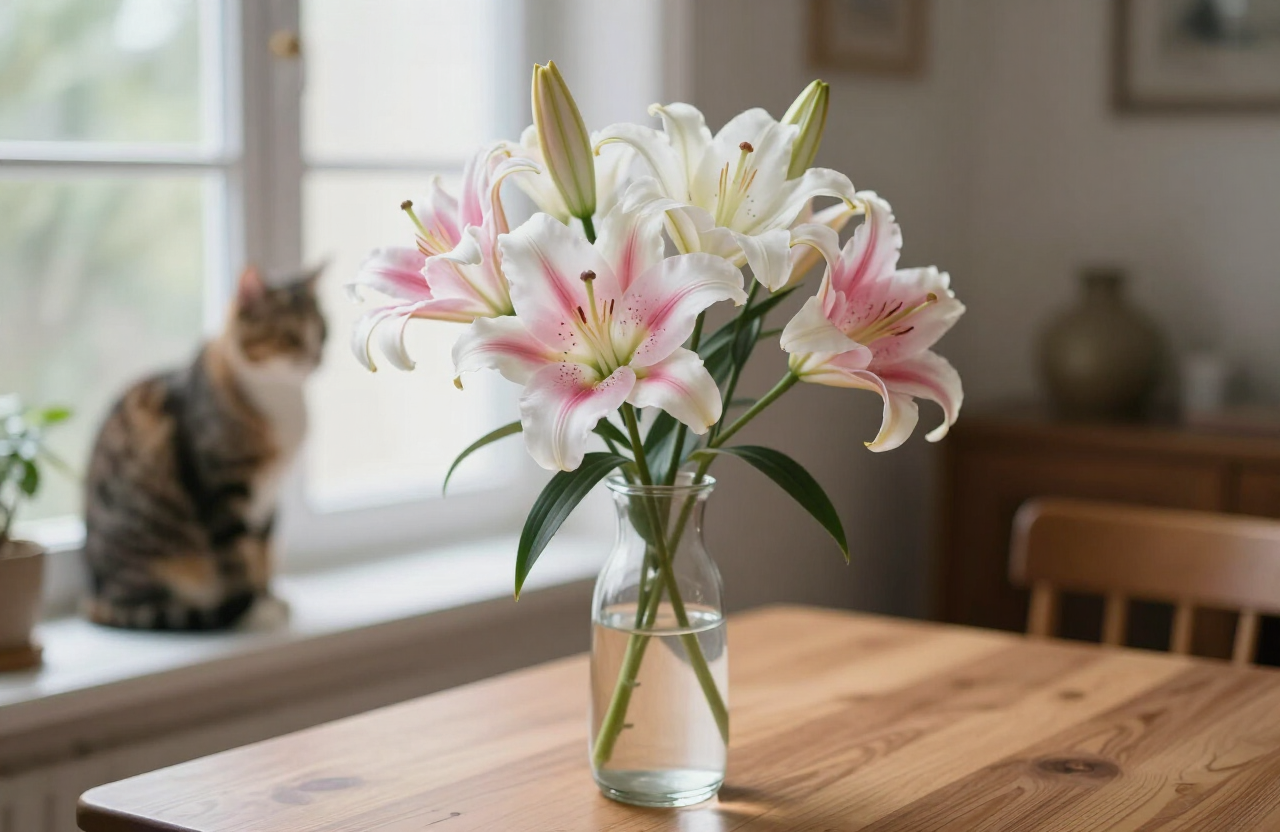
True lilies (Lilium species, such as Easter lilies, Asiatic lilies, Oriental lilies, and tiger lilies) and daylilies (Hemerocallis) are among the most dangerous plants for cats. All parts of the plant are concerning — petals, leaves, stem, pollen, and even the water in the vase. Grooming pollen off their fur is enough to cause a problem, and small amounts have been linked to serious kidney effects in cats.
How to recognize them: large, trumpet-shaped flowers on a tall stem with long, narrow leaves; prominent pollen-heavy stamens. If you share your home with a cat, the safest choice is to keep true lilies out of the house and out of the garden entirely — not just out of reach.
Pothos (Devil’s Ivy)
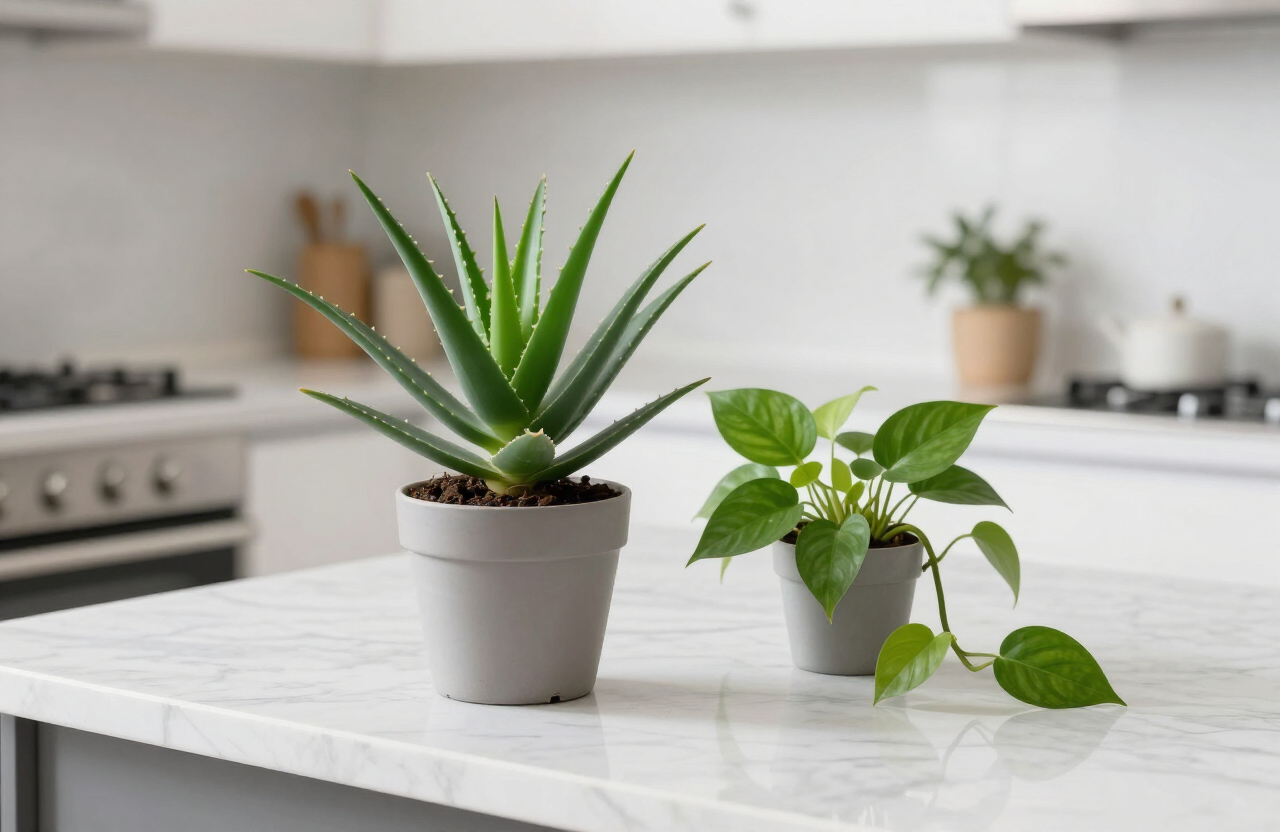
Pothos is one of the most popular trailing houseplants in the world, and one of the most commonly chewed. Its leaves and stems contain insoluble calcium oxalate crystals, which act like tiny needles when they contact the mouth. The result is usually immediate oral irritation — drooling, pawing at the mouth, and vomiting — rather than organ damage, but it is genuinely painful and can swell the throat.
How to recognize it: heart-shaped green leaves, often marbled or variegated with yellow or white, on long vining stems. It grows fast and trails, which is exactly what makes it tempting to a cat. Hang it well above jumping height or swap it for a non-toxic trailer (see the safer alternatives below).
Aloe Vera
Aloe is a kitchen-windowsill staple for humans, but the gel and the outer leaf contain compounds that can upset a cat’s stomach and, in some reports, affect electrolytes. Chewing the leaf usually causes vomiting, diarrhea, and lethargy. The soothing gel we use on our own skin is not the same as a cat swallowing the whole leaf.
How to recognize it: thick, fleshy, upright green leaves with small teeth along the edges and a serrated silhouette, often in a low pot. Move it to a room the cat cannot reach, or gift it to a plant-loving friend without cats.
Sago Palm
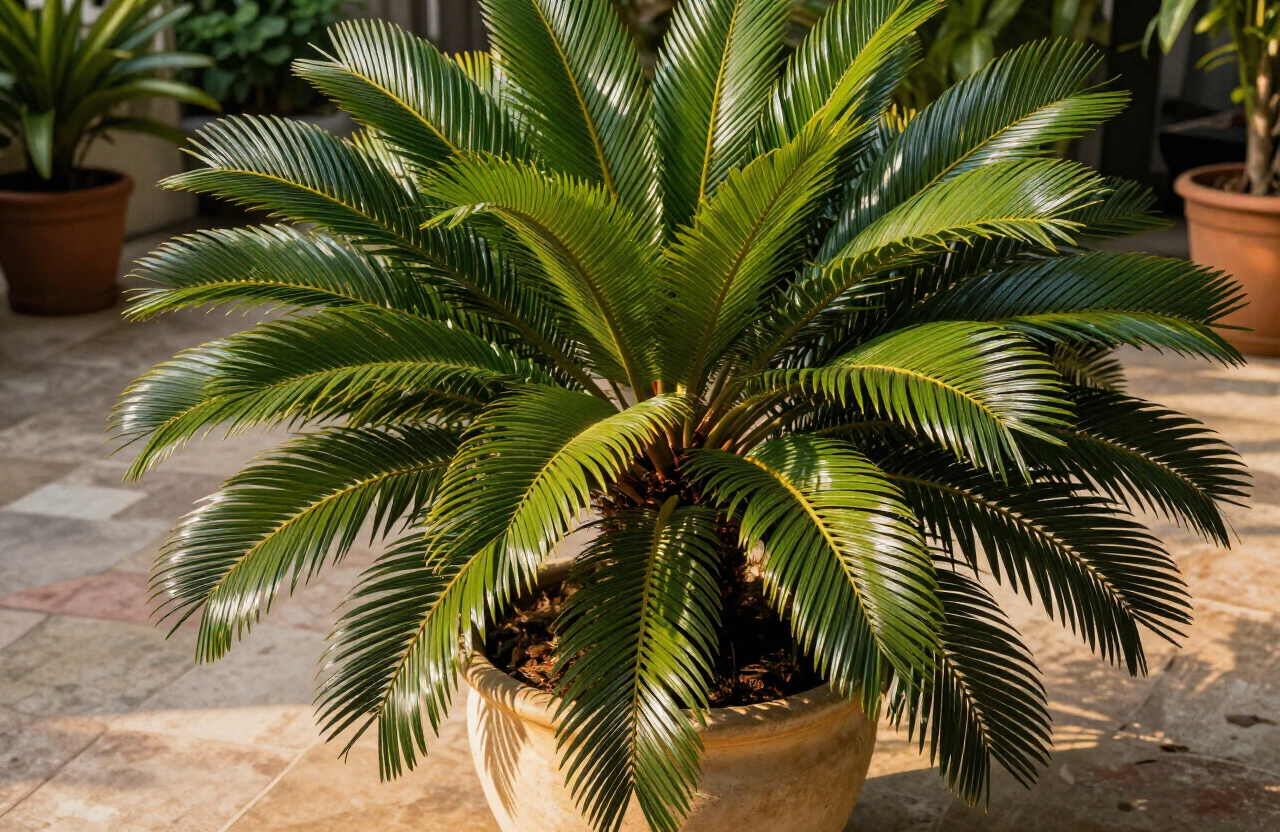
The sago palm (Cycas revoluta) is a popular “indoor palm” that is actually a cycad, and it is one of the more serious plants on this list. The seeds and all parts of the plant contain cycasin, which has been linked to liver effects in cats. Even a seed or two is enough to warrant an emergency call.
How to recognize it: a stout trunk topped with a rosette of stiff, feathery, dark-green fronds that look palm-like but grow slowly and stay compact. Often sold as a tabletop or floor plant. If you have a cat, this is a plant to skip entirely.
Other common houseplants to watch
- Dieffenbachia (dumb cane) — insoluble oxalates; intense mouth irritation, drooling, swelling.
- Philodendron — same oxalate crystals as pothos; oral pain and vomiting.
- English ivy — leaves can cause stomach upset and skin irritation.
- Snake plant (Sansevieria) — saponins; usually vomiting and drooling.
- ZZ plant — oxalates; mouth irritation and digestive upset.
- Peace lily — oxalates; oral burning, drooling, and vomiting.
- Jade plant (Crassula) — can cause vomiting and, in some reports, lethargy or incoordination.
- Amaryllis and daffodil bulbs — stomach upset; bulbs are the most concentrated part.
This list is illustrative, not exhaustive. Many other plants — including outdoor garden flowers, bulbs, and seasonal arrangements — can also be harmful. When in doubt, look the plant up by its botanical name on a trusted toxicity reference and confirm with your vet.
Garden and outdoor plants to note
If your cat goes outside or you bring cut flowers in, a few outdoor plants deserve extra caution: lilies (again), daffodils and tulips (especially the bulbs), foxglove, oleander, autumn crocus, rhododendron and azalea, and yew. Bouquets from florists and farmers’ markets sometimes contain lilies or other risky stems, so it is worth asking what is in an arrangement before it comes home.
Symptoms exposure may cause
Symptoms vary widely depending on the plant, how much was chewed or swallowed, and the cat. The signs below are commonly reported after exposure to toxic plants, but they are not a diagnosis — many other health issues can cause the same symptoms. Let your veterinarian decide what is going on.
- Drooling, pawing at the mouth, or lip smacking
- Redness, swelling, or foaming at the mouth
- Vomiting (sometimes with plant pieces visible)
- Diarrhea or loss of appetite
- Lethargy, hiding, or unusual quietness
- Increased or decreased drinking and urination
- Trembling, wobbliness, or seeming “off”
- In serious cases: collapse, seizures, or difficulty breathing
With lily exposure specifically, watch for drooling and vomiting within the first few hours, followed over the next day or two by increased thirst and urination, then a drop in urination — a pattern that needs immediate veterinary attention. Do not wait to see if symptoms resolve on their own.
What to do if your cat may have chewed a plant
If you suspect your cat has chewed or swallowed part of a plant — even a small amount, and even if you are not sure which plant — act quickly and calmly. Fast contact with a professional matters far more than home measures.
- Remove your cat from the plant and move the plant somewhere your cat cannot reach. Check their mouth for leftover pieces and gently wipe away any sap or pollen on their fur or face with a damp cloth so they do not swallow more while grooming.
- Save a sample. Snip a leaf or stem, keep any vomited pieces, and take a clear photo of the whole plant — including the label if it came with one. Identifying the exact plant helps your vet choose the right response.
- Call your veterinarian or an animal poison service right away. Have the plant name (or your photo), an estimate of how much was eaten, and the time it happened ready. In the U.S., the ASPCA Animal Poison Control Center (888-426-4435) and Pet Poison Helpline (855-764-7661) are common resources; charges may apply.
- Follow the professional’s instructions exactly. Do not induce vomiting, do not give milk, salt, hydrogen peroxide, or any home remedy, and do not wait to see if symptoms pass unless a veterinarian tells you to. Some plants cause more harm coming back up.
- Get to a clinic if you are told to. Bring the plant sample and your cat in a secure carrier. If emergency signs appear — collapse, seizures, trouble breathing, or no urination — treat it as an emergency and go immediately.
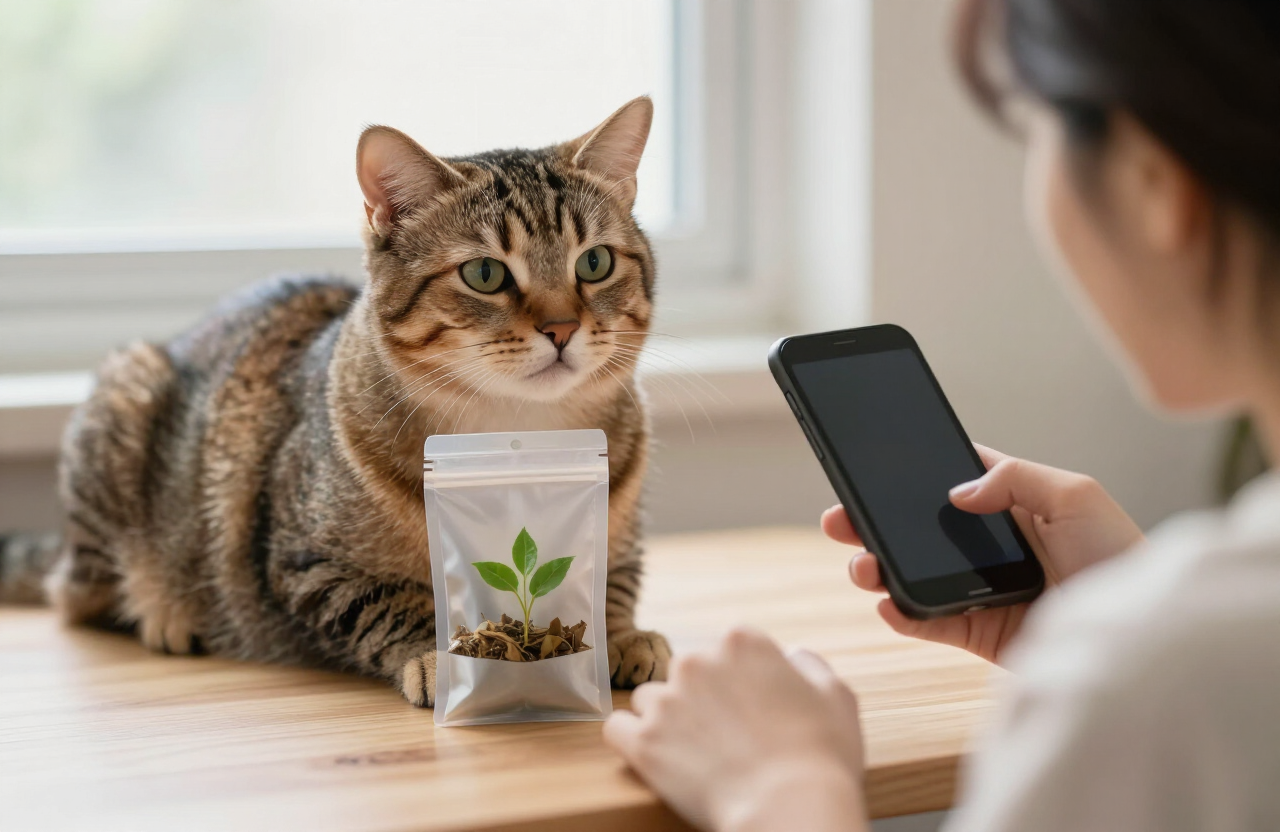
Do not induce vomiting or try home remedies unless a veterinarian tells you to. The right first step is a phone call, not a guess.
Keeping toxic plants away from cats
Prevention is easier than an emergency visit. A few habits keep most cats and most plants safely apart:
- Keep known-toxic plants out of the house entirely, especially lilies and sago palms.
- Hang trailing plants from ceiling hooks well above a cat’s jumping height, and trim any vines that grow back into reach.
- Put shelf plants in rooms the cat cannot access, or behind closed doors and on high, stable surfaces.
- Use a pet-safe bitter deterrent spray on leaves and pots as a backup — it makes plants unappealing but is not a substitute for keeping truly dangerous plants out.
- Clean up dropped leaves, flowers, and pollen right away, and change vase water promptly so a cat cannot drink it.
- Offer a dedicated, cat-safe patch of greenery (cat grass) so your cat has an approved thing to chew.
- Ask florists to leave lilies out of bouquets, and check any gift plant by name before bringing it inside.
Safer plant alternatives to consider
No plant can be guaranteed 100% safe for every cat — individual sensitivities vary, and even non-toxic plants can cause mild stomach upset if a cat eats enough of them. That said, the plants below are widely listed as non-toxic to cats on major animal-safety references and make popular swaps for riskier ones. Always confirm with your own veterinarian before assuming a plant is fine for your cat.
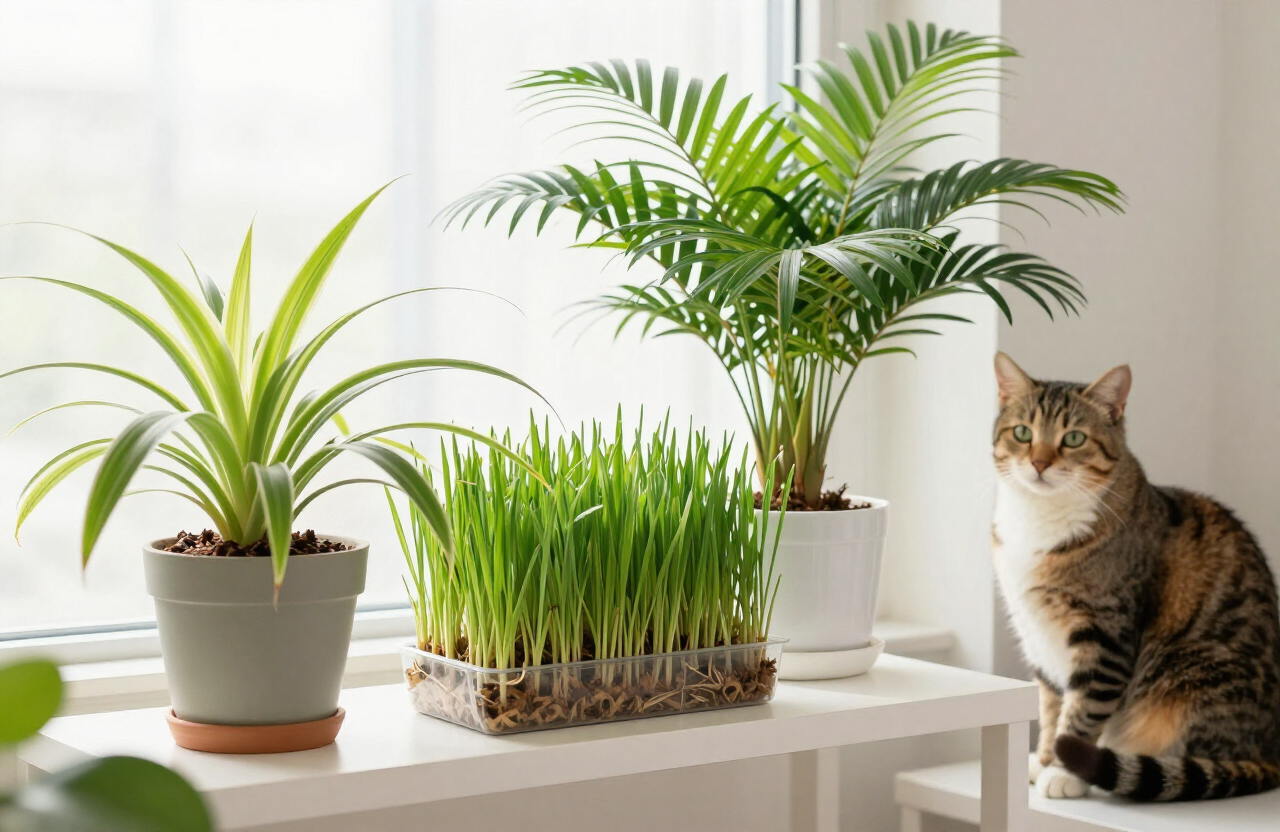
- Spider plant — a non-toxic trailer that replaces pothos or ivy.
- Parlor palm and areca palm — cat-friendly palm looks that replace sago palm.
- Cat grass (wheatgrass, oat grass) — a safe, grown-just-for-them nibble.
- Calathea and prayer plant — striking, non-toxic foliage for shelves.
- Peperomia — compact, cat-friendly, and easy on a windowsill.
- Boston fern — a lush, non-toxic trailing option for a humid spot.
- Catnip and catmint — grown in a pot, a safe and entertaining treat.
- African violet — a flowering, non-toxic option for bright indoor light.
A quick reference to pin
- Most serious: true lilies and daylilies, sago palm — keep out of the home entirely.
- Commonly chewed, painful: pothos, philodendron, dieffenbachia, peace lily, ZZ plant.
- Stomach upset: aloe, jade, snake plant, English ivy, amaryllis and daffodil bulbs.
- If exposure happens: remove access, save a sample and photo, call your vet or a poison helpline, do not induce vomiting.
- Safer swaps: spider plant, parlor palm, cat grass, calathea, peperomia, Boston fern.
The safest plant is the one you have already verified with your veterinarian. When in doubt, leave it out.
A reminder before you shop or repot
Plant toxicity is not one-size-fits-all. It varies by species, by which part of the plant was eaten (leaf, stem, bulb, pollen, or water), by how much, and by the individual cat. The lists above reflect widely documented concerns, but they are not exhaustive and are not a substitute for professional advice. Before bringing any plant into a home with cats — or assuming a plant is safe — verify it with your veterinarian or a trusted animal toxicity reference. If exposure happens, treat it as urgent and call a professional right away.
The bottom line
You do not have to choose between a green home and a safe cat. Keep true lilies and sago palms out entirely, hang or relocate the common oxalate plants like pothos and philodendron, offer cat grass as a distraction, and keep a vet and poison-helpline number saved. If your cat ever chews a plant, remove access, save a sample and photo, and call a professional immediately — do not induce vomiting or try home remedies.
Pin this guide, double-check every plant with your veterinarian, and your cat gets to share a home with greenery that is actually safe to be curious about.
Pin this for later
Save this story to your Pinterest so you can find it when you are ready to shop.